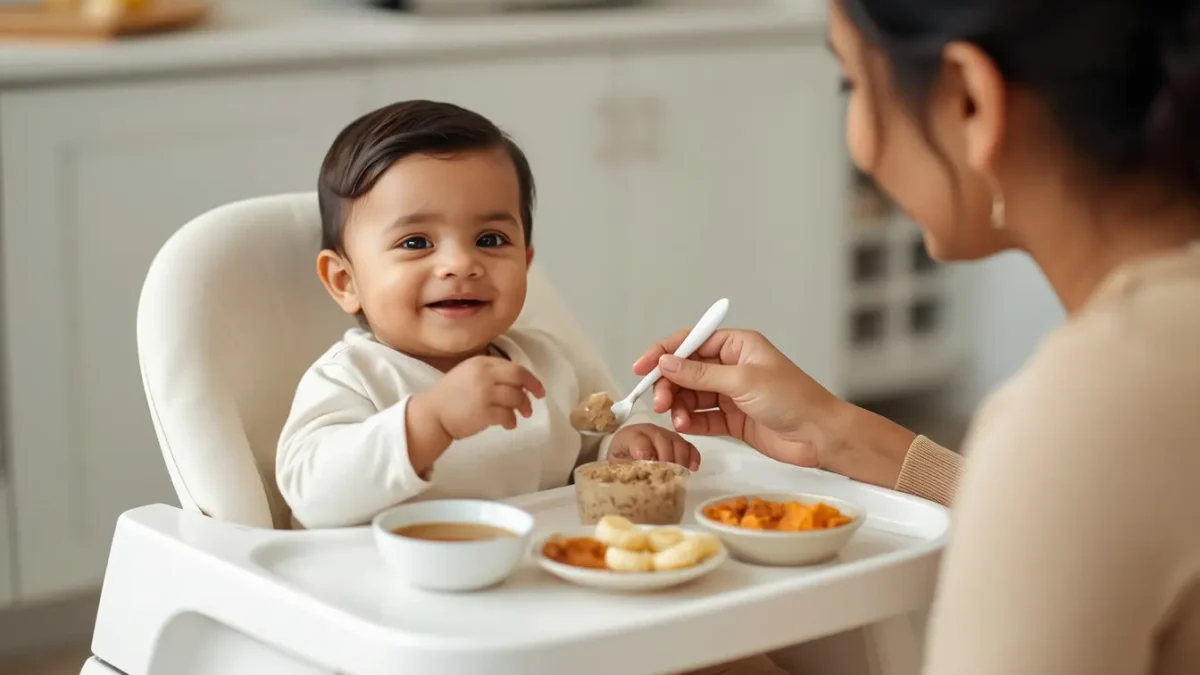
You survived the newborn phase, and your baby is finally crossing the 6-month mark. Just when you think you have this parenting thing figured out, a new challenge begins: solid foods. Suddenly, every relative has an opinion on what you should feed your baby to make them “chubby” and “healthy.”
If you are constantly searching for the best Indian baby food for weight gain 6 to 12 months, or worrying that your baby looks too thin compared to others, take a deep breath. Weight gain during this phase isn’t about overfeeding; it is about introducing nutrient-dense, calorie-rich foods that fuel your baby’s rapid brain and body development.
This guide cuts through the noise. Based on guidelines from the Indian Academy of Pediatrics (IAP) and WHO, here is a practical look at how to increase your baby’s weight naturally at home.
Table of Contents
- How to Increase Baby Weight Naturally at Home in India
- Essential Nutrients for Baby Weight Gain
- Best Indian Baby Food for Weight Gain (6 to 12 Months)
- Quick Comparison: Top Weight Gain Foods
- Age-Specific Weight Gain Diet & Meal Ideas
- Month-by-Month Feeding Chart (6 to 12 Months)
- Weekly Sample Meal Plan
- Practical Feeding Tips for Parents
- Foods to Avoid & Common Mistakes Parents Make
- Common Myths About Baby Weight Gain Food
- When to Contact a Pediatrician
- Key Takeaways
- Frequently Asked Questions
How to Increase Baby Weight Naturally at Home in India
Between 6 to 12 months, your baby’s nutritional needs skyrocket. Breast milk or formula alone can no longer provide all the iron, zinc, and energy required for their growing bodies. This period is called the “complementary feeding” stage.
To increase a baby’s weight naturally, the focus must shift to calorie-dense foods. A baby’s stomach is very small—roughly the size of their fist. They cannot eat large volumes of food. Therefore, every spoonful needs to pack a nutritional punch.
Parents often ask about the rate of weight gain in 5 to 6-month-old babies. On average, an Indian baby will double their birth weight by 5 to 6 months. After 6 months, the weight gain slows down slightly to about 90 to 120 grams per week. This slowdown is completely normal as they become more active, learning to crawl and pull themselves up.
Essential Nutrients for Baby Weight Gain
A healthy baby diet for healthy weight gain isn’t just about calories; it is about the right kind of nutrition. Here is what your baby actually needs from their food:
- Protein: Essential for building muscles, tissues, and enzymes. Best sources: Dal, paneer, eggs (if non-vegetarian), curd.
- Healthy Fats: Critical for rapid brain development and providing concentrated energy. Best sources: Desi ghee, full-fat curd, mashed avocado, powdered nuts (after checking for allergies).
- Iron: Babies are born with iron stores that deplete around 6 months. Iron is vital for brain development and healthy blood. Best sources: Ragi, spinach, lentils, fortified cereals.
- Calcium: Needed for strong bones and teeth as they prepare to stand and walk. Best sources: Ragi, curd, paneer.
- Zinc: Supports the immune system and healthy growth. Best sources: Lentils, whole grains, dairy.
- Vitamin D: Helps the body absorb calcium. Best sources: Sunlight exposure, egg yolks, fortified foods (often supplemented via pediatrician drops).
Best Indian Baby Food for Weight Gain (6 to 12 Months)
You don’t need expensive, imported superfoods to help your baby gain weight. Traditional Indian kitchens are already stocked with some of the most nutrient-dense ingredients recommended by pediatricians.
Ragi (Finger Millet) – The Calcium & Weight Booster
Ragi is a nutritional powerhouse and one of the best healthy weight gain foods for a 6-month-old baby in India. It is incredibly rich in calcium (crucial for bone development) and iron (essential to prevent anemia).
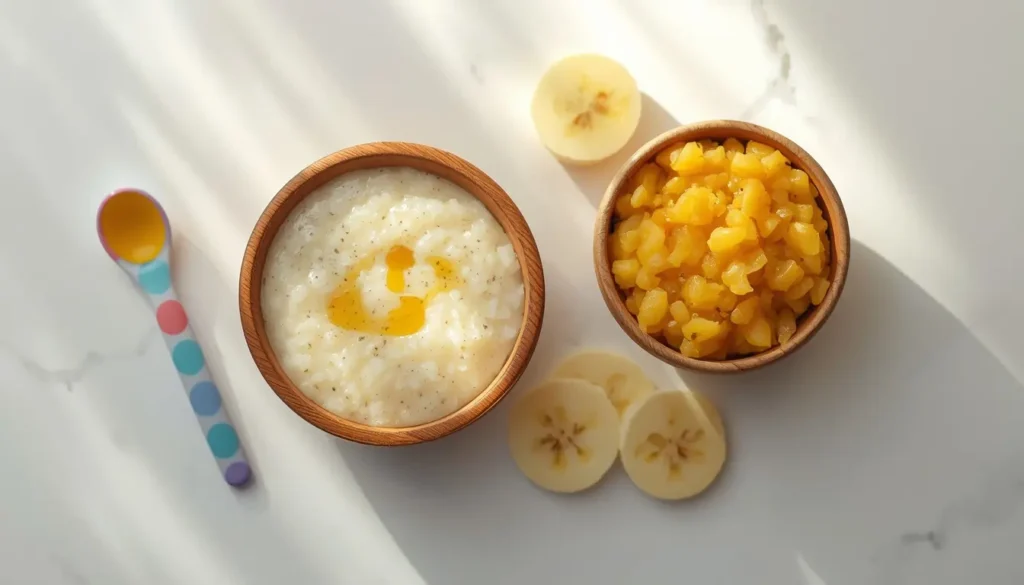
How to serve: A simple weight gain ragi porridge recipe for babies involves roasting sprouted ragi flour in a tiny bit of ghee, then cooking it with water or breast milk until it forms a smooth, lump-free paste. Do not add sugar or jaggery for babies under one year.
Desi Ghee – The Healthy Fat Essential
Adding ghee to baby food for weight gain is a time-tested Indian tradition backed by modern nutritional science. Babies need healthy fats for brain development and to absorb fat-soluble vitamins (A, D, E, and K).
How to serve: Start with just a few drops added to their warm dal or porridge. By 8-10 months, you can gradually increase this to about 1 teaspoon per day. Avoid deep-frying; always add ghee as a topping to cooked food.
Sweet Potato & Banana – Natural Energy Providers
Both sweet potatoes and bananas are calorie-dense, easy to digest, and naturally sweet, making them highly acceptable to babies just starting solids.
How to serve: Steam and mash a sweet potato until it is completely smooth. For bananas, simply fork-mash a ripe one. These make excellent, quick snacks when you are short on time.
Lentils (Dal) & Rice (Khichdi) – The Complete Protein
When combined, rice and lentils form a complete protein, providing all the essential amino acids your baby needs for muscle growth.
How to serve: Khichdi is widely considered the ultimate comfort food for babies. Cook moong dal and rice together until very soft and mushy. Add a pinch of turmeric and a drop of ghee. Important Note: Avoid giving just “dal water.” According to the IAP, the watery part of the dal lacks the necessary calories and protein. Always feed the mashed, solid part of the cooked dal.
Quick Comparison: Top Weight Gain Foods
Here is a quick reference table of the best foods for baby weight gain to help you plan their meals:
| Food | Recommended Age | Main Nutrient | Weight Gain Benefit | Suggested Frequency |
|---|---|---|---|---|
| Ragi | 6+ Months | Calcium & Iron | Builds bone density and muscle mass | 3-4 times a week |
| Desi Ghee | 6+ Months | Healthy Fats | Calorie-dense for rapid brain/body growth | Daily (small amounts) |
| Banana | 6+ Months | Carbohydrates & Potassium | Instant energy and healthy calories | Daily or every alternate day |
| Sweet Potato | 6+ Months | Complex Carbs & Vit A | Sustained energy and weight gain | 2-3 times a week |
| Moong Dal | 6+ Months | Protein | Tissue repair and healthy muscle weight | Daily |
| Paneer / Curd | 8+ Months | Protein & Healthy Fats | Boosts healthy fat reserves | 2-3 times a week |
Age-Specific Weight Gain Diet & Meal Ideas
How you serve these foods changes as your baby grows and develops better chewing and swallowing skills.
6 to 7 Months: The Introduction Phase
At this stage, food should be single-ingredient, smooth, and lump-free. Breast milk or formula remains the primary source of nutrition. Start with just 1 to 2 tablespoons of food once or twice a day.
- Idea: Apple puree, mashed banana, or thin ragi porridge.
8 to 9 Months: Adding Texture
If you are searching for an 8-month baby weight gain lunch, this is when you introduce thicker textures and combinations. Babies can handle mashed foods (not just pureed) and can eat 2 to 3 times a day.
- Idea: Mashed khichdi with a drop of ghee, mashed sweet potato with a little breast milk, or soft curd (yogurt).
10 to 12 Months: Finger Foods & Family Meals
By now, your baby can eat 3 to 4 times a day with 1 or 2 snacks. They should be eating modified versions of your family meals (minus the salt and spices) and practicing with finger foods.
- Idea: Small, soft pieces of paneer, soft-cooked carrot sticks, or small pieces of a soft roti soaked in dal.
Month-by-Month Feeding Chart (6 to 12 Months)
To help you transition smoothly, follow this standard feeding chart designed for healthy foods for baby weight gain:
| Age | Meals per Day | Snacks per Day | Best Foods (Texture) |
|---|---|---|---|
| 6 Months | 1-2 | 0 | Thin purees, mashed banana, smooth ragi porridge |
| 7 Months | 2 | 0 | Thicker purees, mashed sweet potato, moong dal soup (thick) |
| 8 Months | 2-3 | 1 | Mashed khichdi, mashed fruits, soft curd |
| 9 Months | 3 | 1 | Minced food, soft paneer bits, mashed vegetables with ghee |
| 10 Months | 3 | 1-2 | Soft finger foods, small roti soaked in dal, scrambled egg yolk |
| 11 Months | 3 | 1-2 | Chopped soft family foods, soft fruits, upma |
| 12 Months | 3-4 | 2 | Family meals (low spice, no salt/sugar), varied diet |
Weekly Sample Meal Plan
Here is a practical, Indian-focused weekly meal plan tailored for an 8 to 10-month-old baby (adjust textures for younger babies).
| Day | Breakfast | Lunch | Snack | Dinner |
|---|---|---|---|---|
| Monday | Ragi porridge with a drop of ghee | Moong dal khichdi | Mashed banana | Mashed sweet potato |
| Tuesday | Oats porridge cooked in water | Mashed rice and dal | Soft stewed apple | Carrot and potato puree |
| Wednesday | Suji (Semolina) kheer (no sugar) | Vegetable khichdi with ghee | Soft curd (yogurt) | Mashed pumpkin |
| Thursday | Mashed papaya | Dal and soft soaked roti | Mashed avocado or banana | Ragi porridge |
| Friday | Ragi apple porridge | Rice with mashed paneer | Steamed pear | Moong dal khichdi |
| Saturday | Mashed banana with a pinch of nut powder | Spinach and dal mash | Soft curd | Mashed potato with ghee |
| Sunday | Oats and apple puree | Vegetable pulao (very soft/mashed) | Mashed sweet potato | Dal and rice mash |
Practical Feeding Tips for Parents
Establishing good eating habits is just as important as the food itself. Here are some actionable tips for stress-free feeding:
- Introduce one new food every 3–5 days: This helps you easily identify any food allergies.
- Never force-feed: If your baby turns their head away or clamps their mouth shut, respect their cues. Force-feeding creates a negative association with food.
- Continue breastfeeding: Solids are complementary. Breast milk or formula should remain a major source of calories until 12 months.
- Maintain food hygiene: Always wash your hands, utensils, and raw foods thoroughly. A baby’s immune system is still developing.
- Encourage self-feeding: Let them hold a spoon or play with safe finger foods. It gets messy, but it builds vital motor skills.
- Offer water in a cup: After 6 months, offer small sips of water with meals to prevent constipation.
- Eat together: Babies learn by mimicking. Sit them at the family table during mealtimes.
- Be patient with rejections: It can take up to 10-15 exposures before a baby accepts a new taste. Don’t give up after the first try.
Foods to Avoid & Common Mistakes Parents Make
While trying to increase weight, parents sometimes mistakenly offer foods or follow practices that can be harmful to an infant’s developing system. According to pediatric guidelines, strictly avoid:
- Salt: A baby’s kidneys cannot process added salt.
- Sugar & Jaggery: Can lead to early tooth decay and a preference for sweet foods.
- Honey: Carries a risk of infant botulism, a serious illness. Strictly avoid before age 1.
- Cow’s Milk as a Drink: While a little curd or paneer is fine, plain cow’s milk should not replace breast milk or formula before 12 months, as it lacks proper nutrients and can cause intestinal bleeding.
- Choking Hazards: Whole nuts, grapes, and hard candies.
Common Feeding Mistakes to Avoid
- Giving only dal water: This is a major mistake. Dal water fills the baby without providing protein. Always feed the thick, mashed dal.
- Too much fruit juice: Whole, mashed fruits are far better. Juice fills them up with natural sugars and lacks fiber.
- Overfeeding: Trying to force a baby to finish the bowl can lead to vomiting and food aversions.
- Comparing babies with others: Every baby’s genetic makeup and growth curve is unique. Never compare your child’s weight to the neighbor’s child.
Common Myths About Baby Weight Gain Food
Myth: “Chubby babies are always healthier.”
Reality: Health is measured by consistent growth on their own curve, reaching developmental milestones, and overall activity. A lean baby who is active and growing steadily is just as healthy as a chubby one.
Myth: “Formula makes babies gain weight faster than breast milk, so I should switch to formula for solids.”
Reality: Breast milk perfectly adapts to your baby’s needs. There is no need to switch to formula to force weight gain unless advised by a doctor. If you are using formula, our guide on the best infant formula in India can help you choose, but never use it just to “fatten up” a baby.
Myth: “Giving dal water helps in weight gain.”
Reality: This is one of the biggest nutritional mistakes. Dal water fills the baby’s tiny stomach with water, leaving no room for the nutrient-dense solid dal that actually promotes weight gain.
When to Contact a Pediatrician
While gradual weight changes are normal, certain signs require medical attention. Consult your doctor if you notice:
- No weight gain for several consecutive weeks.
- Noticeable weight loss after solids have been introduced.
- Persistent feeding refusal or extreme distress during meals.
- Persistent vomiting (more than usual spit-up).
- Severe diarrhea or blood in the stool.
- Developmental delays (not rolling, sitting, or responding normally).
- Your baby’s weight drops significantly below their expected growth curve.
Key Takeaways: Quick Summary
- Complementary feeding should begin at exactly 6 months.
- Focus on calorie-dense, nutrient-rich foods like ragi, moong dal, sweet potato, and desi ghee.
- Avoid “dal water”—feed the mashed, solid dal instead for protein.
- Never add salt, sugar, or honey to a baby’s food before their first birthday.
- Breast milk or formula remains the primary source of nutrition until 12 months.
- Introduce one new food at a time (wait 3-5 days) to monitor for allergies.
- Never force-feed your baby; respect their hunger cues.
- A healthy baby is active and growing on their own curve, not necessarily “chubby.”
Frequently Asked Questions
Why is my 8-month-old baby not gaining weight?
Between 6 and 9 months, babies become highly active—learning to sit, crawl, and pull up. They burn a lot more calories. If they are not gaining weight, they might need more calorie-dense foods (like ghee, potato, or khichdi) added to their meals. However, if weight gain stalls completely or drops, consult your pediatrician to rule out underlying issues.
Can I give cow’s milk to my 6-month-old for weight gain?
No. The Indian Academy of Pediatrics (IAP) and WHO strictly advise against giving cow’s milk as a primary drink before 1 year of age. It is difficult for infants to digest, lacks sufficient iron, and can cause micro-bleeding in the intestines. Stick to breast milk or infant formula.
How many times a day should a 9-month-old eat solids?
A 9-month-old baby should ideally be offered solid foods 3 times a day, along with 1 or 2 small, healthy snacks (like a piece of soft fruit). This is in addition to their regular breast milk or formula feeds.
What is the average weight of a baby at 5 months?
By 5 months, most babies have roughly doubled their birth weight. For an Indian baby born at 3 kg, the average weight at 5 months would be approximately 6 to 6.5 kg. However, this varies based on genetics and feeding methods.
⚠️ Medical Disclaimer:
This article is for informational purposes only and is based on general guidelines from the WHO and IAP. It is not a substitute for professional medical advice. Always introduce new foods one at a time to monitor for allergies, and consult your pediatrician regarding any concerns about your baby’s diet, weight gain, or overall health.
Comments
Be the first to leave a comment!