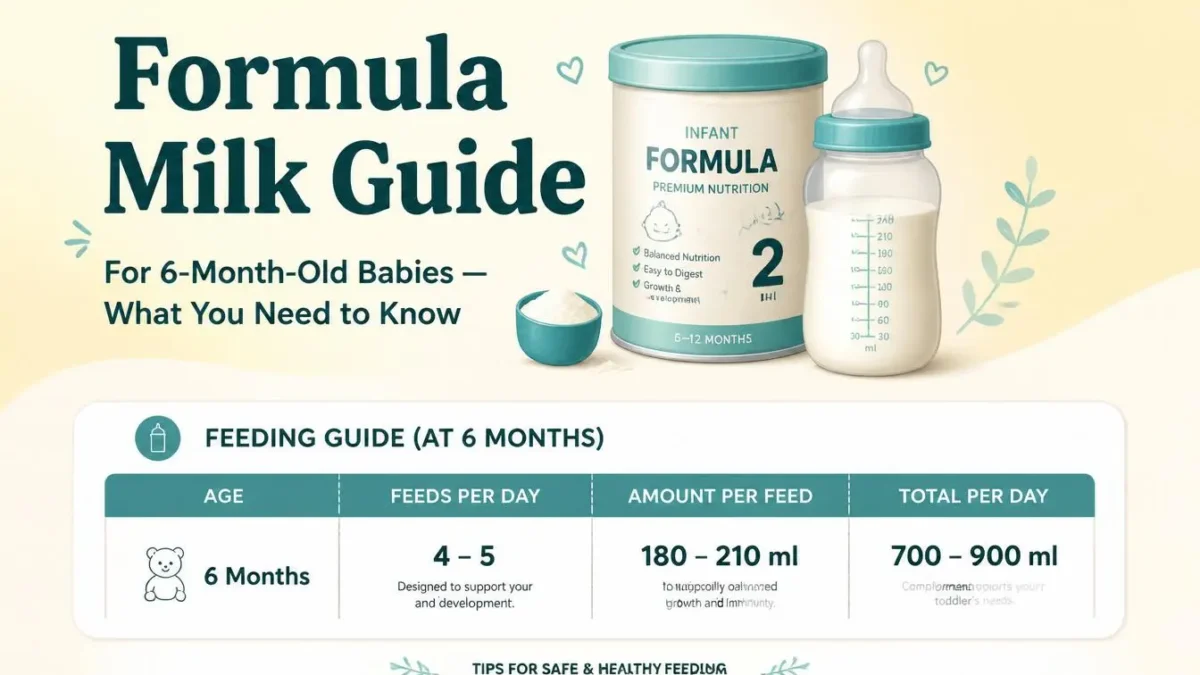
Choosing the right formula for your baby can feel overwhelming — especially when the shelves are packed with so many options and every brand claims to be the best. If you’ve been searching for which milk formula is good for a 6-month-old baby, you’re not alone. This is one of the most common questions new parents ask, and honestly, there’s no single perfect answer for every baby.
This guide walks you through what you actually need to know — which formulas are available in India, how they compare, and what to look for depending on your baby’s age and needs.
What’s in This Guide
- What Is Infant Formula?
- Why Parents Use Formula
- Breast Milk vs Formula: An Honest Comparison
- Best Infant Formula Brands in India
- Which Formula Is Good for a 6-Month-Old Baby?
- 3 Types of Baby Formula Explained
- Practical Safety Tips for Formula Feeding
- Frequently Asked Questions
What Is Infant Formula?
Infant formula is a manufactured food designed to feed babies when breast milk isn’t available or isn’t sufficient. It comes in powdered, liquid concentrate, and ready-to-feed forms. Most formulas are made from cow’s milk protein that’s been processed to make it easier for babies to digest.
It’s not a perfect substitute for breast milk — nothing is — but modern formulas are carefully formulated to provide the nutrients a baby needs to grow and develop in the first year of life.
Why Parents Use Formula
There are many valid reasons families turn to formula — and none of them need to be justified to anyone.
- Medical conditions: Some mothers can’t produce enough milk due to health issues, hormonal factors, or certain medications.
- Personal choice: Some mothers choose not to breastfeed, and that’s a completely personal decision.
- Supplementing breastfeeding: Many mothers use formula alongside breast milk, especially during the early weeks when supply is establishing.
- Return to work: Going back to work while maintaining a pumping schedule isn’t realistic for everyone.
Whatever the reason, formula is a legitimate and widely used feeding option. The most important thing is that your baby is fed, growing, and healthy.
Breast Milk vs Formula: An Honest Comparison
| Factor | Breast Milk | Infant Formula |
|---|---|---|
| Antibodies | Yes — helps protect against infections | No natural antibodies |
| Nutrition | Naturally balanced for the baby | Standardized, regulated nutrition |
| Convenience | Always ready, no preparation | Requires preparation and storage |
| Cost | Free | Ongoing expense |
| Flexibility | Anyone can feed the baby | Anyone can feed the baby |
| Composition | Changes based on baby’s needs | Fixed, consistent composition |
Both options can support healthy growth. The World Health Organization (WHO) recommends exclusive breastfeeding for the first 6 months where possible, but confirms that formula remains a safe and nutritionally adequate option when breastfeeding isn’t possible or chosen.
Best Infant Formula Brands in India
Here are the major formula brands available in India, along with what makes each one distinct. Keep in mind that “best” depends on your baby’s specific needs — what works well for one baby may not suit another.
Nestlé NAN Pro
Manufacturer: Nestlé India
Variants: NAN Pro 1 (0–6 months), NAN Pro 2 (6–12 months), NAN Pro 3 (12+ months)
Key features: Contains Bifidus BL probiotic cultures and a blend of DHA, ARA, and iron. NAN Pro is one of the most widely available formulas in India and is often recommended by pediatricians as a starting option when formula supplementation is needed.
Pepticate Hypoallergenic Infant Formula (Pack of 4)
If your baby has a cow’s milk allergy, Pepticate is clinically proven to provide quick relief from symptoms like eczema, gas, and colic. It features a breast milk-inspired prebiotic blend with DHA and ARA to support infant digestive and brain health.
🛒 Check Price on Amazon: Buy Pepticate Hypoallergenic Formula (13.2 oz, Pack of 4) Here
Nestlé LACTOGEN
Variants: LACTOGEN 1 (0–6 months), LACTOGEN 2 (6+ months)
Key features: Enriched with DHA, ARA, nucleotides, and prebiotics. LACTOGEN is a more affordable option compared to NAN Pro and is widely available at pharmacies and grocery stores across India.
Similac Advance
Manufacturer: Abbott Laboratories
Key features: Contains OptiGRO — a combination of DHA, Lutein, and Vitamin E intended to support brain and eye development. Similac is generally better known internationally but is available in India through larger pharmacies and online retailers.
Enfamil A+
Manufacturer: Reckitt Benckiser
Variants: Enfamil A+ Stage 1, Stage 2
Key features: Fortified with DHA and other essential nutrients. The Stage 1 formula is designed with brain development in mind for the first 6 months of life.
Pediasure (for older children only)
Manufacturer: Abbott Laboratories
Suitable for: Children 2 years and above — not for infants
Key features: Designed for picky eaters or children who need nutritional supplementation. This is not an infant formula and should not be used for babies under 2 years.
Which Formula Is Good for a 6-Month-Old Baby?
At 6 months, your baby is at an important transition point. This is when most pediatricians recommend starting solid foods, while continuing to breastfeed or formula-feed as the primary nutrition source.
If you’re looking for which milk formula is good for your 6-month-old baby, here’s a practical breakdown:
- If you’re continuing from birth: Stay on Stage 1 formula (designed for 0–6 months) until your doctor recommends switching to Stage 2. There’s no need to change formula at exactly 6 months if your baby is doing well.
- Switching to Stage 2: Stage 2 formulas (like NAN Pro 2 or LACTOGEN 2) are designed for babies 6 months and older. They typically have slightly higher protein and iron content. Your pediatrician can guide you on when to make this switch.
- Starting formula at 6 months: If you’re introducing formula for the first time at 6 months, a Stage 1 or Stage 2 formula both work. Check with your doctor for a recommendation based on your baby’s weight and growth.
Note for US Readers: Nestlé LACTOGEN is highly popular in Asia. For the US market, Dr. Brown’s Good Start Soothe Pro is the direct equivalent infant formula from Nestlé’s trusted quality.
🛒 Check Price on Amazon: Buy Dr. Brown’s Good Start Soothe Pro Here
A common question parents have is whether cow’s milk can replace formula at 6 months. The answer is no. The American Academy of Pediatrics (AAP) clearly states that cow’s milk is not recommended as a main drink for babies under 12 months — it’s too high in certain proteins and minerals and too low in iron for infant needs. Formula or breast milk should remain the primary milk source until the first birthday.
If you’d like a more detailed look at formula feeding specifically for 6-month-olds, this article on formula milk for 6-month-old babies has some practical guidance.
3 Types of Baby Formula Explained
1. Powdered Formula
The most common type and the most economical. It needs to be mixed with cooled boiled water before feeding. Always use the scoop provided in the tin and follow the measurements on the label exactly — adding too little or too much powder can affect your baby’s nutrition and digestion.
2. Concentrated Liquid Formula
Comes in liquid form and needs to be diluted with equal parts water before feeding. Less common in India but available through some importers and online stores.
3. Ready-to-Feed Formula
Pre-mixed and requires no preparation — just open and feed. This is convenient for travel or hospital stays, but it’s considerably more expensive than powdered formula and harder to find in India.
Practical Safety Tips for Formula Feeding
- Always sterilize bottles and feeding equipment before use, especially for young infants.
- Use water that has been boiled and cooled to prepare powdered formula. The NHS recommends using water at no less than 70°C to reduce the risk of bacterial contamination in powdered formula.
- Discard any formula left in the bottle after a feed — bacteria multiply quickly in prepared formula. Don’t save it for later.
- Prepared formula stored in the back of a refrigerator can be kept for up to 24 hours.
- Don’t switch formulas frequently without a clinical reason. If your baby is tolerating a formula well, there’s no benefit to changing brands.
- If your baby shows persistent gas, rashes, vomiting, or signs of discomfort, speak to your pediatrician before switching.
As your baby grows and starts eating solids around 6 months, formula feeding naturally reduces over time. Starting with simple foods and gradually building variety works well for most babies at this stage.
Tracking your baby’s growth during this time is also useful — a baby weight chart can help you see whether your baby is gaining weight at a healthy pace on their current formula.
Frequently Asked Questions
Which formula milk is best for a 6-month-old baby in India?
There’s no single best formula — it depends on your baby’s tolerance, your budget, and your doctor’s recommendation. NAN Pro 2 and LACTOGEN 2 are among the commonly used options for 6-month-olds in India. Always consult your pediatrician before starting or switching formula.
Can I introduce formula at 6 months if I’ve been exclusively breastfeeding?
Yes, you can introduce formula at any point. If you’re switching from exclusive breastfeeding to formula at 6 months, it’s a good idea to introduce it gradually to allow your baby to adjust. Your doctor can guide you through the process.
What are the 3 types of infant formula?
Powdered formula (most common and economical), concentrated liquid formula (needs dilution), and ready-to-feed formula (no preparation, most expensive). In India, powdered formula is by far the most widely used and available.
Is cow’s milk okay for a 6-month-old baby instead of formula?
No. Cow’s milk is not recommended as a main drink for babies under 12 months. It is too high in certain proteins and minerals and too low in iron for infant nutritional needs. Formula or breast milk should be the primary milk source until the baby turns one.
How do I know if a formula suits my baby?
Signs that a formula is working well include steady weight gain, normal stools, no excessive gas or crying after feeds, and your baby seeming satisfied after feeding. If you notice persistent rashes, blood in stools, vomiting, or significant discomfort, speak to your pediatrician.
Should I switch from Stage 1 to Stage 2 formula at exactly 6 months?
Not necessarily at exactly 6 months. The “stage” recommendations are general guidelines. If your baby is growing well on Stage 1, you can continue it or make a gradual switch based on your doctor’s advice.
Comments
Be the first to leave a comment!