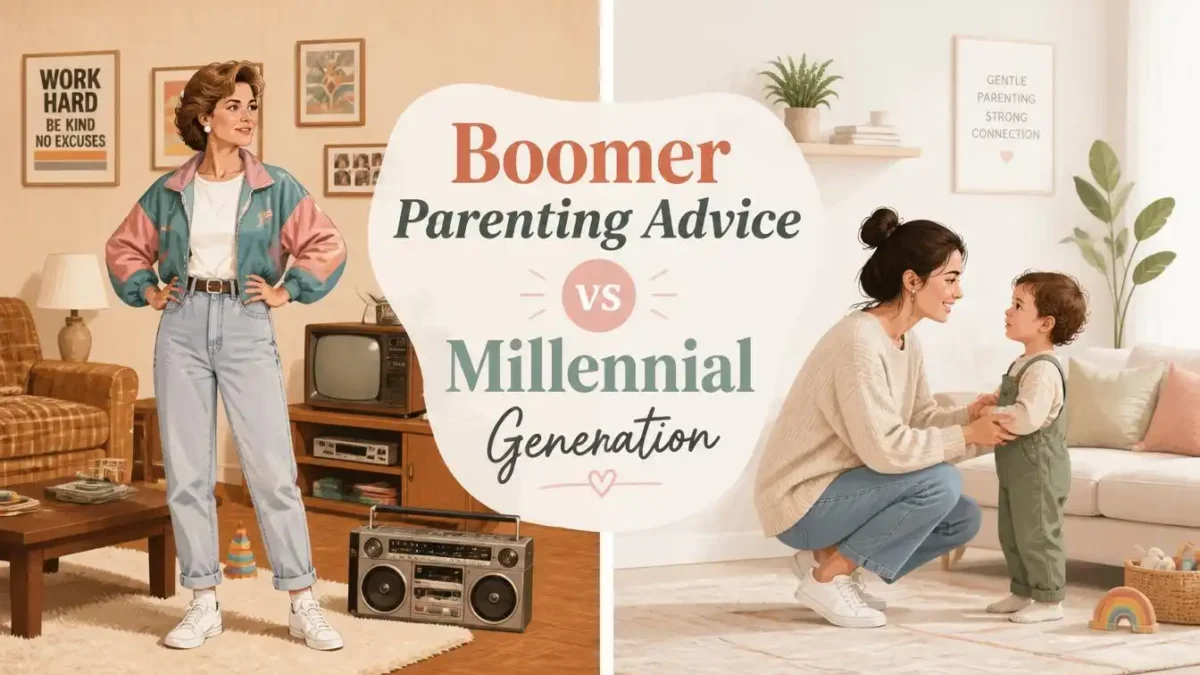
Boomer Parenting Advice vs Millennial Generation
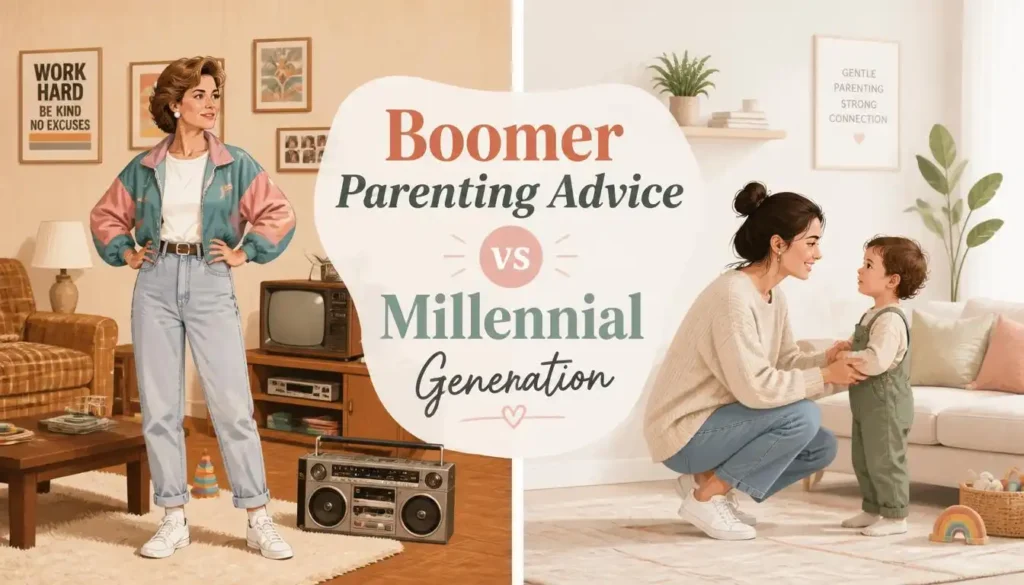
There is a big difference between the way many of us were raised by our parents and the way we are raising our own children today. That doesn’t mean one parenting style is right and the other is wrong—both have their own strengths. The real challenge is passing on the values we learned from our parents in a way that today’s children can understand and accept. It isn’t easy because children today grow up in a completely different world. They are more curious, more informed, and often one step ahead when it comes to technology and new ideas. In the 1980s and 1990s, most children simply accepted what their parents told them without asking many questions. Today, parenting involves far more conversations, explanations, and negotiations than it did when we were growing up. That shift has created a noticeable generational gap between boomer parenting advice and the expectations of modern millennial families.
If you’re a millennial parent, you’ve probably experienced this familiar family moment: your toddler starts having a meltdown, you try to calm them down by talking through their feelings, and a grandparent quickly says, “You’re spoiling that child. In my day, we just gave them a time-out.”
That one moment perfectly captures why parenting conversations have changed so much over the years. So, what really separates boomer parenting advice from the approach many millennial parents follow today? And how can families respect different opinions without turning every parenting discussion into an argument?
1. The Core Difference: Gentle Parenting vs Tough Love
One of the biggest changes over the past few decades is how we understand children’s emotions and our role as parents. Many parents from the Boomer generation followed a “tough love” approach. Discipline focused on obedience, and children were generally expected to respect authority without questioning it. Parents made the decisions, and those decisions were rarely open for discussion.
Many millennial parents take a different approach. Instead of focusing only on obedience, they try to build trust through communication. They encourage children to express their emotions, ask questions, and understand the reasons behind family rules.
This parenting style is often called gentle parenting. Rather than relying on immediate punishment, the goal is to teach emotional regulation, empathy, and problem-solving—often helping children truly understand the difference between love and care—while maintaining healthy boundaries. Many parents believe this helps break unhealthy generational patterns and supports better emotional well-being.
2. The “Gramnesia” Effect: Why Do Boomers Forget?
If you’ve ever wondered why grandparents confidently offer parenting advice that feels outdated, you’re not alone. Many parents jokingly call this “Gramnesia”—the idea that grandparents seem to forget just how exhausting it was to raise young children.
Sleepless nights, endless tantrums, picky eating, and daily struggles often fade with time. As a result, advice may sound much simpler than the reality they once experienced themselves.
Millennials, who grew up during rapid technological change, now have access to parenting books, pediatric guidance, online communities, and evidence-based resources that simply weren’t available to previous generations.
When you’re navigating a difficult parenting stage, hearing “You’re doing it wrong” usually doesn’t help. Many parents today prefer combining family wisdom with modern research so they can make decisions that fit their own child rather than relying only on tradition.
3. Handling Unsolicited Advice (and Setting Healthy Boundaries)
Receiving advice from parents and grandparents is almost unavoidable, but that doesn’t mean you have to follow every suggestion.
Acknowledge good intentions. Most grandparents genuinely want to help. A simple response like, “Thanks, we’ll definitely think about that,” keeps the conversation respectful.
Trust your parenting decisions. If your pediatrician or trusted parenting resources recommend a different approach, it’s okay to follow that guidance without feeling guilty.
Avoid unnecessary arguments. You don’t need to defend every parenting choice. Sometimes the healthiest response is to smile, listen respectfully, and continue doing what works best for your family.
Protect your confidence. If constant criticism starts affecting your mental well-being, setting clear and respectful boundaries is completely reasonable.
4. Is One Generation Actually Better at Parenting?
The truth is that neither generation has all the answers.
Boomer parents raised children according to the knowledge, culture, and expectations of their time. They often emphasized independence, responsibility, resilience, and respect.
Millennial parents are raising children in a world filled with technology, social media, changing educational expectations, and greater awareness of children’s emotional health. If you are struggling to balance these modern demands, finding a practical guide for busy parents can be a lifesaver. As a result of this access to information, many prioritize communication, emotional intelligence, mental health, and digital safety.
Rather than asking which generation is better, a more helpful question is this:
Which parenting lessons still work today?
Many families are discovering that the strongest parenting approach combines the best of both generations. Values like respect, responsibility, outdoor play, and family connection still matter, while empathy, emotional support, and open communication help children thrive in today’s world.
Also Read: Helpful Resources for Modern Parents
Frequently Asked Questions (FAQs)
What is the meaning of boomer parenting advice vs millennial generation?
The meaning revolves around the fundamental shift in raising children. Boomer parenting advice often emphasizes “tough love,” strict obedience, and unquestioned respect for authority. In contrast, the millennial generation focuses on gentle parenting, emotional intelligence, open communication, and understanding a child’s feelings rather than demanding immediate compliance.
How can I balance traditional advice with modern parenting?
The best approach is finding a middle ground. You can maintain traditional values like respect, responsibility, and limited screen time, while adopting modern millennial strategies like empathy, open dialogue, and positive reinforcement.
Is there a boomer parenting advice vs millennial generation PDF download available?
Yes! For parents looking for an in-depth understanding, actionable tips on setting boundaries with grandparents, and a detailed comparison chart, we have created a comprehensive guide. You can download the free PDF guide here to read offline or share with your family.
Conclusion
Navigating boomer parenting advice as a millennial isn’t always easy. Every family has different experiences, opinions, and traditions. The important thing is remembering that no one knows your child better than you do.
Some traditional parenting lessons are timeless, while others need to evolve to match today’s world. By respecting the wisdom of previous generations and combining it with modern research and a better understanding of children’s emotional needs, parents can create a balanced approach that works for their own family.
At the end of the day, parenting isn’t about proving one generation was right and the other was wrong. It’s about raising kind, confident, healthy children who are prepared for the world they’re growing up in.
Comments
Be the first to leave a comment!