Is Aveeno Baby Good for Seborrheic Dermatitis?
If your baby has yellowish, greasy-looking flakes on their scalp or behind their ears, and you are staring at your Aveeno Baby bottle wondering whether to use it — this post is for you.
Seborrheic dermatitis in babies is surprisingly common. It often shows up in the first few weeks of life and can look alarming if you haven’t seen it before. Many parents search for whether Aveeno Baby is helpful or harmful for this specific condition, and the answer isn’t as simple as yes or no.
Let’s walk through what seborrheic dermatitis actually is, how it differs from eczema, and whether Aveeno Baby products have a role in managing it.
What Is Seborrheic Dermatitis in Babies?
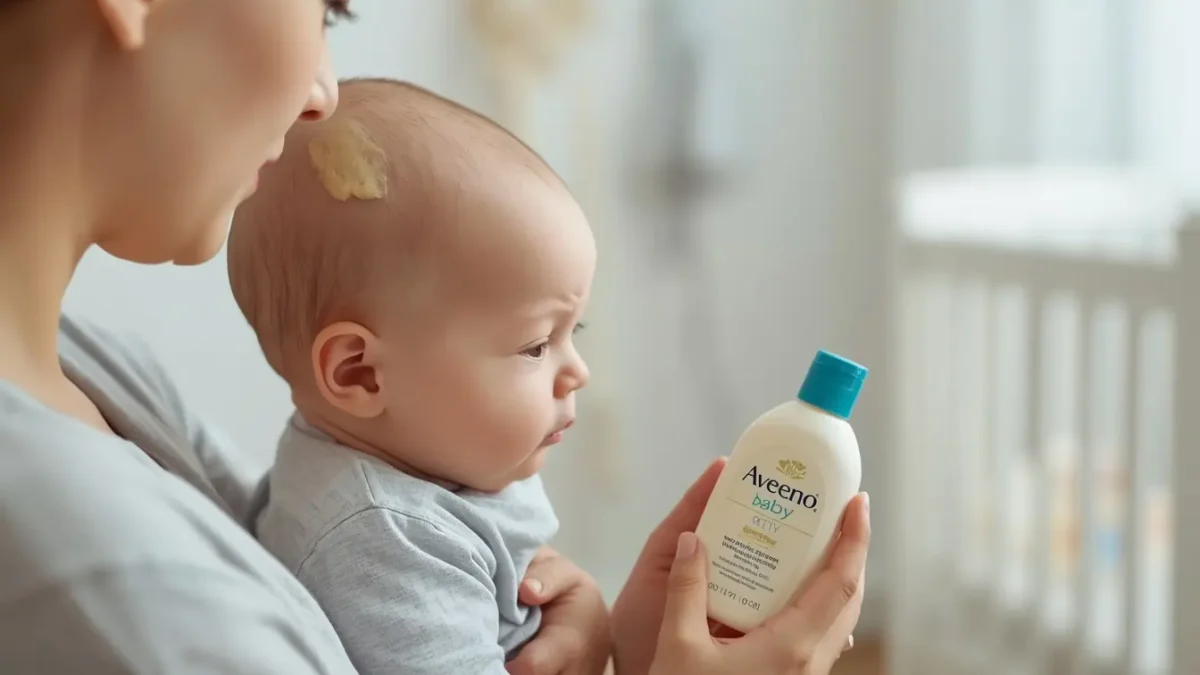
Seborrheic dermatitis — often called “cradle cap” when it appears on a baby’s scalp — is a common skin condition in infants. It typically presents as yellowish or brownish crusty or scaly patches on the scalp, eyebrows, behind the ears, or around the nose.
Unlike eczema, seborrheic dermatitis in babies is generally not itchy. It is not caused by an allergy, and it is not contagious. Most cases in infants resolve on their own within a few months, though some can last longer.
The exact cause is still not fully established, but research suggests it may be related to overactive sebaceous (oil) glands in combination with a naturally occurring yeast called Malassezia that lives on the skin. Maternal hormones passed to the baby during pregnancy may also play a role in triggering oil production in the first months of life.
It is worth noting: seborrheic dermatitis and baby eczema can look similar, and some babies do have both. If you are unsure which one your baby has, it is always worth checking with your pediatrician before starting any treatment.
Is Aveeno Baby Good for Seb Derm?
This is the question most parents are really asking. The short answer is: Aveeno Baby products may be safe to use alongside seborrheic dermatitis management — but they are not specifically formulated to treat it.
Here is the distinction that matters:
Seborrheic dermatitis is driven by excess oil and yeast activity on the skin. Many standard moisturizers, when applied heavily to already oily, scaly patches, can trap the scales further or create a moist environment that may not be ideal for affected areas.
Aveeno Baby’s colloidal oatmeal formulations are designed to restore moisture and soothe dry, irritated skin. They work well for eczema, general dryness, and minor irritation. For the dry, itchy areas of the skin that are not affected by seb derm flares, they can still be used safely.
However, for the active scaly or crusty patches of cradle cap or seborrheic dermatitis, heavy daily moisturizers are generally not the recommended first approach. Instead, pediatric guidance typically involves gently loosening scales with a soft brush, using a mild baby shampoo, or applying a thin layer of mineral oil before washing.
Where Aveeno Baby May Still Help
Even when managing seborrheic dermatitis, many babies experience accompanying dryness or mild irritation on unaffected areas of skin — cheeks, arms, legs, and trunk. In those areas, a fragrance-free Aveeno Baby moisturizer can still serve its purpose well.
Some parents also find that the Aveeno Baby Eczema Therapy range helps with any itching or general skin sensitivity their baby develops alongside seb derm patches. This makes sense — the colloidal oatmeal in these products is a recognized skin protectant that can help reduce minor irritation.
What you want to avoid is applying any thick cream or lotion directly on to active, flaking, crusty patches without first consulting your doctor. More moisture on those areas is not always helpful.
How Seborrheic Dermatitis Differs From Eczema
Because parents often mix these two up — and both conditions come up in searches around Aveeno Baby — it helps to understand them side by side.
| Feature | Seborrheic Dermatitis (Cradle Cap) | Baby Eczema (Atopic Dermatitis) |
|---|---|---|
| Appearance | Yellowish or brownish greasy scales | Dry, red, often rough patches |
| Itchiness | Usually not itchy | Often intensely itchy |
| Common Location | Scalp, eyebrows, ears, nose folds | Cheeks, elbow creases, behind knees |
| Likely Cause | Overactive oil glands, yeast on skin | Weak skin barrier, immune response, allergens |
| Typical Age | First few weeks to months | Can appear from 2–6 months onward |
| Usual Outcome | Often clears on its own by 6–12 months | May persist; often managed long-term |
| Role of Moisturizer | Not the primary treatment | Regular moisturizing is a core part of care |
Understanding this difference will help you use Aveeno Baby more effectively — applying it where it genuinely helps rather than assuming any skin issue calls for the same response.
What Actually Helps With Cradle Cap?
Since moisturizers alone are not the treatment for seborrheic dermatitis, what does help? The approach most pediatricians recommend for mild cradle cap is simple and low-risk:
- Gentle brushing: A soft-bristled baby brush used in circular motions can help lift loose flakes from the scalp before or during bathtime.
- Regular gentle washing: Using a mild, fragrance-free baby shampoo a few times a week can help manage scalp buildup.
- Mineral oil or baby oil: A very thin layer applied to the scalp a few minutes before washing may help loosen stubborn scales.
- Avoid picking: Trying to remove crusts manually can break the skin and cause irritation or infection.
If the condition is spreading, looks inflamed, or is not improving after a few weeks of basic care, your pediatrician may recommend a medicated shampoo or a short course of a low-potency antifungal treatment. This is not something to manage with over-the-counter moisturizers alone.
Is Aveeno Baby Wash Safe to Use When Baby Has Seb Derm?
Yes — using Aveeno Baby Daily Moisture Wash or their fragrance-free body wash during bathtime is generally considered safe even when a baby has seborrheic dermatitis on the body. These products are designed to be gentle and soap-free, which is suitable for sensitive infant skin.
For the scalp specifically, a dedicated gentle baby shampoo — whether from Aveeno or another brand — is typically more appropriate than a body wash. Aveeno does offer a Baby Shampoo and Conditioner option that many parents find gentle enough for daily or near-daily use.
The key is to avoid anything heavily fragranced or with sulfate-based cleansers, which can further irritate already sensitive areas.
A Word on “Is Aveeno Eczema Cream Dermatologist and Pediatrician Tested?”
This is a question that comes up often. Aveeno Baby’s Eczema Therapy range is marketed as having been tested by dermatologists and pediatricians, and their products are generally well-regarded in clinical settings for managing dry, eczema-prone skin. However, “tested” does not mean “clinically proven to treat” a specific medical condition.
If your baby’s skin condition is causing distress — whether it’s seborrheic dermatitis, eczema, or something in between — using an over-the-counter cream as the sole treatment is not always enough. A pediatrician visit gives you the clearest picture of what you are actually dealing with and what is safe to use.
📚 Also Read
Frequently Asked Questions
Can I use Aveeno Baby on cradle cap?
Aveeno Baby body moisturizers are generally safe to use on areas of skin that are dry or irritated. For active cradle cap patches on the scalp — which are usually oily and scaly rather than dry — a targeted approach using gentle shampoo and soft brushing is more appropriate. Applying thick cream directly to crusty scalp patches is not typically recommended.
Is Aveeno Baby good for seborrheic dermatitis on the face?
For facial dryness or mild irritation around the nose or eyebrows that may accompany seb derm, a fragrance-free Aveeno Baby lotion used lightly on unaffected surrounding skin may help with general comfort. However, applying moisturizer on active scaly patches on the face should be discussed with your pediatrician first.
Does Aveeno Baby make seb derm worse?
There is no general evidence that Aveeno Baby products worsen seborrheic dermatitis. That said, applying heavy moisturizers directly to oily, scaly patches may not help and could occasionally trap scales. Patch-test new products and monitor your baby’s skin response carefully.
When should I see a doctor for baby seb derm?
If the patches are spreading beyond the scalp, appear red and inflamed, seem to be causing discomfort, or are not improving after a few weeks of gentle home care — consult your pediatrician. Also seek advice if you are unsure whether your baby has cradle cap, eczema, or another skin condition entirely.
Is aveeno baby good for seb derm compared to other brands?
Aveeno Baby is not specifically formulated to treat seborrheic dermatitis — and neither are most drugstore baby moisturizers. For the dry skin areas around seb derm patches, it performs well due to its colloidal oatmeal base. For the active condition itself, the brand choice matters less than the method of care: gentle washing, soft brushing, and pediatrician guidance.
The Realistic Bottom Line
Aveeno Baby is a safe, well-formulated product line for general infant skin care. If your baby has seborrheic dermatitis, you don’t necessarily need to stop using it — but you also shouldn’t rely on it as a treatment for the condition.
Think of it this way: Aveeno Baby moisturizers are useful for the dry, sensitive skin areas that often come alongside seb derm. For the actual flaky, scaly patches, gentle washing and brushing are more effective starting points.
If the condition isn’t clearing up within a few weeks, or if you’re at all unsure what you’re looking at, a quick pediatrician visit is always the most sensible step. Getting the right diagnosis saves you from applying the wrong products and gives your baby faster relief.
Sources & References
The information in this article is based on guidance from trusted medical and health organizations. Below are the sources referenced:
- American Academy of Dermatology (AAD) — Seborrheic Dermatitis: Diagnosis & Treatment
- HealthyChildren.org (American Academy of Pediatrics) — Cradle Cap
- Cleveland Clinic — Cradle Cap (Seborrheic Dermatitis in Babies)
- NHS UK — Cradle Cap
- U.S. FDA — Colloidal Oatmeal OTC Skin Protectant Monograph
- NIH / PubMed Central — Colloidal Oatmeal: History, Chemistry & Clinical Properties
Comments
Be the first to leave a comment!