Is a Mustard Pillow for Baby Safe? What Parents Should Know
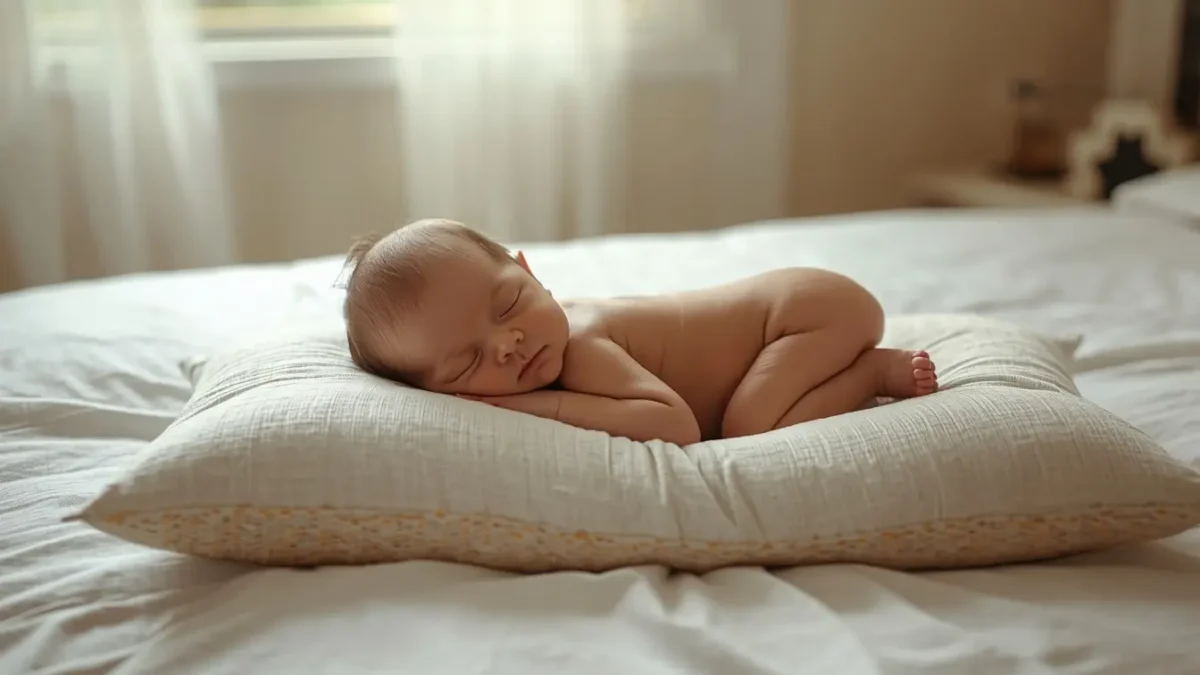
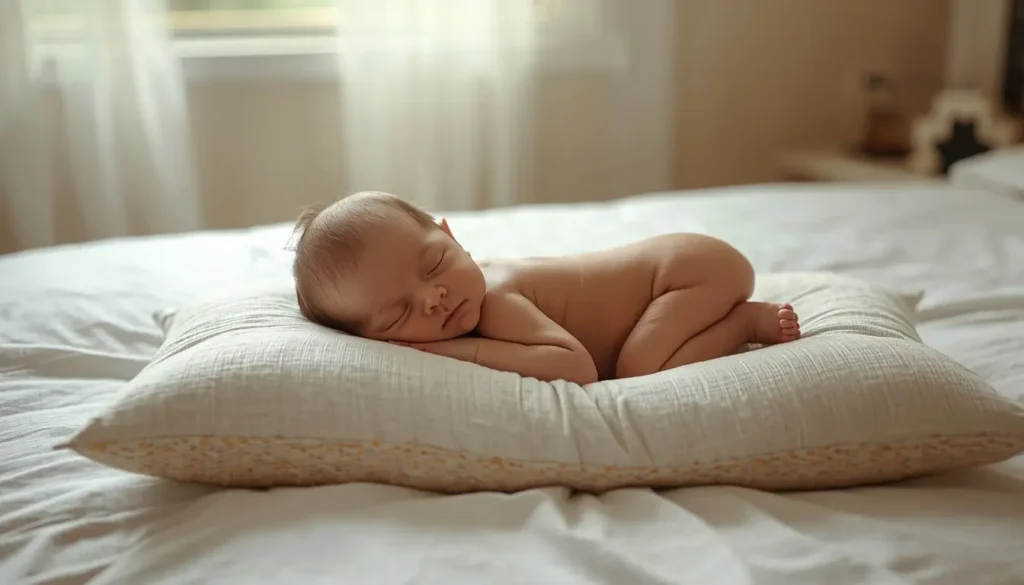
If you have grown up in an Indian household, you have probably seen it — a small, flat pillow filled with tiny dark seeds placed gently under a newborn’s head. That is the mustard seed pillow, known as rai ka takiya or sarso ka takiya across Indian homes. Grandmothers trust it completely. Pediatricians rarely recommend it. And new parents find themselves somewhere in between.
Many Indian parents continue to use mustard pillows as part of traditional baby care, while modern pediatric recommendations emphasise safe sleep practices above all else. Understanding both perspectives honestly can help parents make better informed decisions.
This article covers both sides without dismissing either one.
Table of Contents
- What Is a Rai Pillow and Why Do Indian Families Use It?
- Traditional Claims: Are There Real Benefits?
- Is a Mustard Pillow Safe During Sleep?
- Side Effects and Risks Parents Should Know
- How to Use a Mustard Pillow Safely
- How to Make a Mustard Pillow at Home Safely
- Comparison: Homemade vs. Ready-Made
- Frequently Asked Questions
What Is a Rai Pillow and Why Do Indian Families Use It?
A mustard seed pillow is a flat, compact pillow filled with small black mustard seeds — called sarson or rai. Unlike standard foam or fibre pillows, it carries almost no elevation. The seeds inside shift freely, gently adjusting to the shape of a baby’s resting head without applying hard, focused pressure.
In Indian families, this pillow has been used across generations as a soft resting base during daytime rest. The belief is that the seeds cradle a newborn’s skull more evenly than a firm, ungiving surface — which matters in the early months when skull bones are still soft and responsive to sustained contact.
In South India, the same item is often called kaduku takiya in Tamil. Regional parenting communities — Facebook groups, WhatsApp circles, and online forums — regularly discuss it, and opinions are genuinely divided. Many parents have used it without any issue. Others have raised concerns, mostly about quality rather than the tradition itself.
Mustard Pillow for Baby: Are There Real Benefits?
The benefits associated with mustard seed pillows deserve an honest look. Some are based on reasonable logic. Others are cultural beliefs that have not been verified by research.
Can a Mustard Pillow for Baby Help With Head Shape?
Positional plagiocephaly — the temporary flattening of one side of a baby’s skull — is a common concern in the first few months. It develops when a baby lies in the same position repeatedly, with sustained pressure on one spot of the still-soft skull.
Some families believe a mustard seed pillow helps distribute resting pressure more evenly across the skull, reducing the chance of flattening in one spot. However, scientific evidence supporting this specific claim is limited. There are no peer-reviewed studies confirming that mustard pillows prevent or correct positional plagiocephaly.
Pediatric guidance for head shape concerns focuses on supervised tummy time, regularly alternating the baby’s resting position, and specialist consultation for cases that persist. A pillow may reduce one contributing factor, but it is not a corrective device.
Can It Help With Colic and Gas?
Mustard seeds retain mild warmth briefly after being in a warm or sunlit environment. Some families believe this gentle warmth near a baby’s body helps soothe colic or gas discomfort. However, scientific evidence specifically supporting mustard pillow warmth as a colic remedy does not exist.
What is broadly understood is that gentle, consistent warmth from any source can be calming for young babies. Parents who find their baby settles near a mustard pillow are most likely benefiting from that general soothing effect rather than any property specific to mustard seeds.
Is a Mustard Pillow for Baby Safe During Sleep?
This is where traditional use and current pediatric guidance come into direct conflict, and where clear information matters most.
Why Elevation During Sleep Is a Concern
The American Academy of Pediatrics (AAP) recommends that infants sleep on a firm, flat surface without soft objects, loose bedding, or any inclined positioning. This guidance exists because soft or elevated surfaces increase the risk of suffocation and positional asphyxia — situations where a baby’s airway becomes partially blocked. In the early months, babies lack the muscle control to reposition themselves if this happens.
Even a slight head elevation can cause a newborn’s chin to tilt forward, narrowing the airway. This is why inclined infant sleep products have faced regulatory action in several countries in recent years.
A thin, flat mustard pillow used during a supervised daytime rest is a different situation from a thick cushion in an unmonitored sleep space. That distinction depends entirely on the pillow’s design and whether a parent is actively present.
What Kind of Pillow Do Pediatricians Recommend?
For unsupervised night sleep, the guidance is clear: no pillow at all until around 18 months to 2 years, when children are mobile enough to self-adjust. For supervised daytime rest, if a family chooses to use a mustard pillow, the design requirements matter — it must be very thin, made from breathable fabric such as muslin or soft cotton, and securely stitched so no seeds can escape. A parent must be actively present throughout.
Side Effects and Risks Parents Should Know
The risks associated with mustard seed pillows are real but manageable when parents know what to watch for.
Seed Aspiration Hazard
Mustard seeds are very small. A small tear in the pillow fabric — particularly in homemade versions with thin cotton or loosely stitched seams — can allow seeds to escape. If a baby comes into contact with loose seeds, there is a risk of accidental ingestion or, more seriously, aspiration into the airway.
Inspect the stitching before every use. If any wear, fraying, or loosening appears, retire the pillow immediately. Do not attempt to repair and continue using it.
Moisture and Mould Inside the Pillow
Babies — especially newborns — sweat more than many parents expect, as their temperature regulation is still developing. A pillow in regular contact with a baby’s head absorbs moisture over time. Because mustard seeds are an organic material, they can hold dampness deep inside the filling even when the outer cover appears dry.
In India’s humid climate, this creates conditions for mould or fungal growth inside the pillow with no visible external sign. A musty or sour smell is a warning. Any pillow that has been in regular use for more than two to three months without the inner filling being aired or replaced should be discarded. Purpose-made pillows with removable zip covers have a clear practical advantage here — the filling can be accessed and aired properly.
How to Use a Mustard Pillow for Baby Safely
If you decide to use one, placement matters from the start. The pillow should lie completely flat on a firm surface — not folded or placed on a soft layer that creates any incline. Lay your baby so the back of the head rests gently at the centre of the pillow. When you need to step away, remove the pillow from the sleep space.
How Many Months Is a Mustard Pillow for Baby?
Most families use it during the first three to four months, when babies spend most of their time lying still and head shape concern tends to be highest. Some continue to around six months. After that, as babies develop head control and begin rolling, the pillow should be retired from the sleep environment.
| Age | Recommended Approach |
|---|---|
| 0–3 months | Supervised use only — parent present at all times |
| 3–6 months | Optional supervised use — reassess as baby gains mobility |
| 6+ months | Generally not needed — remove from sleep environment |
What to Look for When Buying
Mustard pillows are widely available on Meesho, Amazon.in, and local baby stores. When evaluating any option, look for fabric that is pure cotton or muslin rather than a synthetic blend; seed containment with compartmentalised stitching so seeds stay evenly distributed; a removable zip closure on the outer cover so it can be washed and the filling aired separately; and a thickness that feels like a thin pad when you press the centre — not a cushion.
Low-cost options from unverified sellers may use rough stitching or poor seed containment. For something in direct contact with a newborn’s head, choosing a carefully constructed option is worth the small extra cost.
How to Make a Mustard Pillow for Baby at Home Safely
Making one at home is entirely possible, and many families prefer it because they can control every material. You will need unbleached muslin or soft pure-cotton fabric, clean dry food-grade mustard seeds, and strong cotton thread.
Cut two pieces of fabric to approximately 20 cm × 15 cm. Sew three sides with a double stitch, turn right-side out, and fill loosely with seeds — they should shift freely when you press the pillow. Sew the fourth side with reinforced stitching, check all corners for gaps, then make or buy a removable muslin pillowcase to slip over it. This outer layer is what you wash regularly.
For ongoing care: wash the outer cover every three to four days, air the inner pillow in direct sunlight every week or two, and replace the pillow entirely every two to three months. Discard it immediately if any stitching loosens, the fabric thins, or a musty smell appears.
Comparison: Homemade vs. Ready-Made Mustard Pillow for Baby
| Feature | Homemade Rai Pillow | Purpose-Made Option |
|---|---|---|
| Thickness | Depends on amount of filling used | Usually designed flat for newborns |
| Fabric | Depends on available household cloth | Typically muslin or soft cotton |
| Seed containment | Depends on stitching care | Compartmentalised reinforced seams |
| Washability | Difficult — filling usually cannot be separated | Removable cover for regular washing |
| Moisture management | Harder to air the inner filling | Easier when cover is removable |
| Cost | Very low | Moderate |
| Safe for unsupervised sleep? | No — neither type is | No — neither type is |
The difference between homemade and ready-made matters mainly for hygiene and structural reliability. The core safety rule applies equally to both.
Frequently Asked Questions
Is a mustard pillow good for a newborn baby?
It can be used safely during supervised daytime rest if the pillow is flat, breathable, and securely stitched. It is not recommended for unsupervised or night sleep. How well it works depends entirely on the quality of the pillow and how it is used.
Why is my baby’s skin getting darker under the head or neck?
Slight skin darkening in the neck or head area is usually caused by friction, sweat accumulation, or warmth from any surface the baby rests against regularly. It is generally harmless and fades as babies become more mobile. If there is also redness or a rash, check the fabric and wash the cover more frequently. Ask your pediatrician if you are concerned.
What happens if mustard seeds leak and the baby touches them?
Loose dry mustard seeds are a choking and aspiration hazard for young infants. If any seed leakage is noticed, stop using the pillow immediately and do not return it to use until it is fully replaced.
Can mustard pillows help with colic or gas?
Some families believe the mild warmth retained by mustard seeds helps soothe a fussy or gassy baby. There is no clinical research confirming this. General warmth and parental presence are the more consistently supported calming factors for young infants.
Is a mustard pillow good for the baby’s head shape?
Some families believe it helps distribute resting pressure more evenly, though scientific evidence supporting this is limited. For flat head concerns, tummy time and repositioning are the recommended approaches. Consult your pediatrician if the concern persists.
How do I clean a mustard seed pillow?
Wash the removable outer cover every three to four days. Air the inner filling in sunlight every week or two. Replace the entire pillow every two to three months, or sooner if it develops a musty smell or shows any wear.
Is a mustard pillow safe for baby in humid Indian climates?
In humid conditions, the filling can retain moisture and develop mould over time without any visible external sign. A removable, washable cover and regular sunlight airing are especially important. Discard the pillow promptly if it smells musty.
Related Reads
- Why Does My Baby Cry at Night? Causes and Calming Tips
- Newborn Care in the Rainy Season: Skin, Sleep and Comfort
- Baby Milestone Tracker: Month-by-Month Development Guide
Disclaimer: This article is for educational purposes only and should not be considered medical advice. Always consult your pediatrician regarding infant sleep safety, head-shape concerns, or any health-related questions about your baby.
The Bottom Line
A mustard seed pillow for baby is not inherently dangerous. The tradition behind it comes from genuine care, and when the pillow is flat, breathable, securely made, and used during supervised rest, it does not need to be dismissed entirely.
What it cannot replace is a safe sleep environment. For unattended night sleep, a firm, flat, pillow-free surface is the right choice at every age before 18 months. When something feels unclear, your pediatrician is always the right person to ask.
Comments
Be the first to leave a comment!