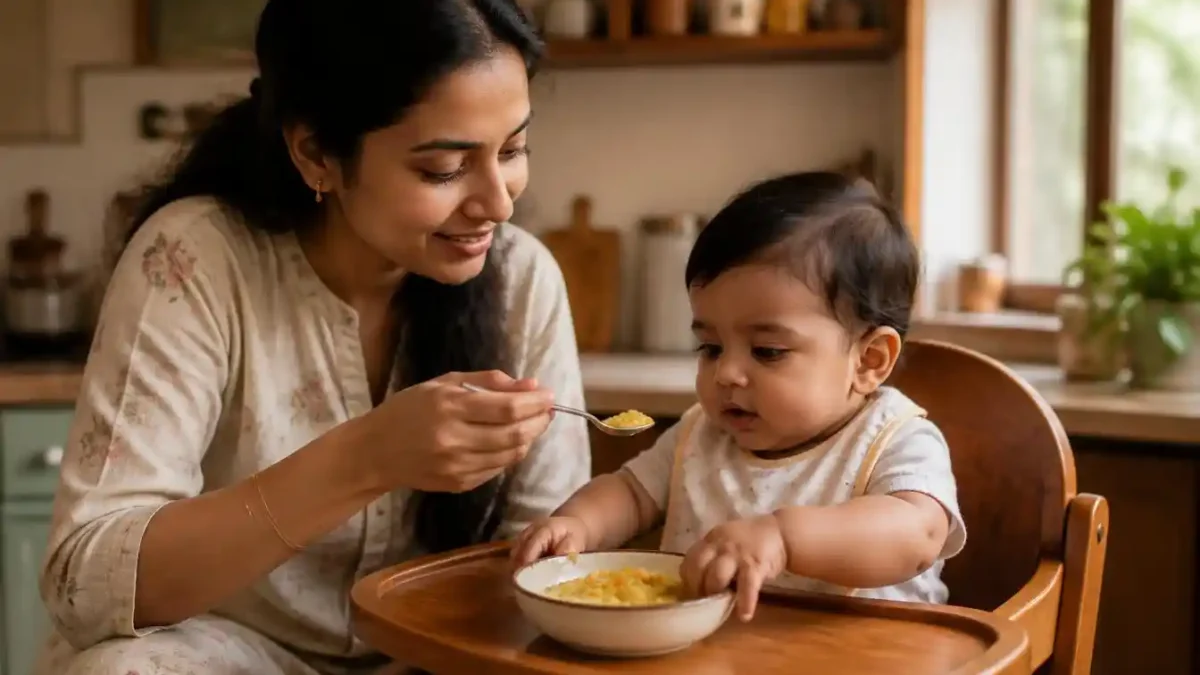
Best Weight Gain Food Options for 9, 10, and 11 Month Old Babies
You’ve been watching your baby’s weight faithfully for months — the clinic visits, the scale at home, the reassurance of steady gains every week. And then somewhere around nine, ten, or eleven months, the numbers on the scale seem to slow down. Maybe even plateau. And suddenly, the anxiety sets in.
Here’s what most parents aren’t told at the right time: this is normal. This is expected. And it’s happening for a reason.
Between 9 and 11 months, babies become physically explosive. They’re crawling, pulling themselves up on furniture, bouncing, reaching — burning significantly more energy than they were as a passive, mostly stationary 6-month-old. Their growth rate naturally slows down during this phase, even when feeding seems consistent. If your baby is just starting solids or recently moved past that stage, our 6 month baby solid food chart for Indian babies covers the earlier foundation. If your 10 month old baby is not gaining weight the way they used to, it’s almost always a story of higher energy expenditure, not a failing on your part.
That said, there’s a real and important difference between a normal slowdown and a genuine concern. This guide covers both. You’ll get a practical 10 month old baby not gaining weight diet plan for India, calorie-dense Indian recipes, a structured daily feeding chart, and the clear red flag signs that mean it’s time to call your pediatrician — not worry at home.
Why Weight Gain Slows Down Between 9 to 11 Months
Understanding why this happens removes a lot of unnecessary fear. There are three main reasons, and all of them are developmental — not medical problems.
Active Metabolism: The Crawler’s Calorie Burn
A baby who has just discovered crawling is essentially running a mini-marathon every day. Pulling up to a stand, cruising along furniture, bouncing up and down — all of this burns calories your baby didn’t need to burn two months ago. The body redirects energy toward movement and motor development, which can temporarily slow the pace of weight gain. This is by design, not by deficiency.
Teething Discomfort: When Eating Hurts
Between 9 and 11 months, most babies are cutting their upper front teeth. Teething inflames the gums and makes chewing and even swallowing uncomfortable. A baby who refuses food that they previously ate happily is often just having a bad teething week — not developing a long-term feeding problem. Offering cooler, softer textures during active teething phases can help.
Transitioning Textures: The Texture Confusion Phase
At this age, babies are moving away from smooth purees toward mashed, lumpy, and eventually finger-food textures. This transition is genuinely confusing for some babies. They may reject foods they previously accepted because the texture has changed — and until they adapt, food intake can dip temporarily. Patience and consistency during this phase matter more than trying to go back to smooth purees.
Best Weight Gain Food Options for 9, 10, and 11 Month Old Babies
The goal when building a weight gain food in 9 month old to 11-month-old feeding plan is calorie density in small volumes. Their stomachs are tiny — roughly the size of their fist. Every spoonful needs to count. These food groups are your tools.
Healthy Fats: Desi Ghee, Butter, and Nut Powders
Fat is the most calorie-dense macronutrient available, and for babies this age, it’s also essential for brain development. Adding just half a teaspoon of pure desi ghee to khichdi, dal, or porridge adds around 20 extra calories with no extra volume. Homemade nut powders — made by dry-roasting and grinding almonds, cashews, or walnuts — can be stirred into porridges or mashes for an easy calorie and healthy fat boost. Start with a small amount (¼ teaspoon) to introduce, then gradually increase as your baby tolerates it.
Complex Carbs: Sweet Potato, Potato, and Ripe Bananas
These are your energy workhorses. Mashed sweet potato with ghee is one of the most reliable 10 month baby weight gain recipes because it’s high in calories, naturally sweet, easy to digest, and versatile. Ripe bananas provide quick energy and pair well with nut powders. Soft-boiled potato mash is a gentle, filling option for babies navigating teething. These foods also happen to be widely available across all Indian states at low cost.
High-Protein Foods: Moong Dal, Paneer, Soft Curd, and Eggs
Protein supports tissue repair, muscle growth, and organ development. Soft-cooked moong dal is gentle on digestion and easy to incorporate into khichdi or as a standalone mash. Paneer (cottage cheese) is a culturally familiar Indian protein source — soft cubes can be served as finger food or crumbled into sabzi. Well-set, full-fat curd adds both protein and gut-friendly probiotics. For non-vegetarian families, soft-boiled or scrambled egg is one of the most complete proteins available at this age (introduce carefully as an allergen, one new component at a time).
Nutrient-Rich Grains: Sprouted Ragi, Oats, Suji, and Soft Roti
As part of an indian 9 to 11 month baby weight gain diet chart, grains provide the carbohydrate base that keeps your baby energised between feeds. Sprouted ragi (finger millet) is particularly valuable — it’s high in calcium, iron, and amino acids, and in South Indian households is already a traditional baby food. Oats porridge cooked with full-fat curd or breast milk adds easy calories — if you’re considering overnight oats as a convenient option, read our detailed guide on overnight oats for babies: safety and recipe before trying it. Soft, soaked pieces of chapati can be served as an early finger food — moisten them with dal or curd to soften further.
Sample 10 Month Old Baby Weight Gain Diet Plan (Indian Feeding Chart)
This is a structured 1-day timetable designed specifically for 9 to 11-month-old babies whose weight gain needs a boost. Adapt times to fit your baby’s routine — this is a framework, not a rigid schedule. Breast milk or infant formula continues to be offered between and after all solid meals.
| Time | What to Offer | Calorie Boost Tip |
|---|---|---|
| 6:00–7:00 AM | Breast milk or formula (on waking) | — |
| 8:00–8:30 AM (Breakfast) | Sprouted ragi porridge with mashed banana, or oats porridge with almond powder and ghee | Add ½ tsp ghee + 1 tsp nut powder for extra calories |
| 10:00–10:30 AM (Mid-Morning Snack) | Full-fat curd with soft fruit bits (banana, stewed pear) or mashed avocado | Use full-fat curd, not low-fat variants |
| 12:00–12:30 PM (Lunch) | Dal khichdi with mashed vegetables (carrot, pumpkin, sweet potato) + 1 tsp ghee | Add nut powder stirred through. Use moong + masoor dal for higher protein |
| 2:00–2:30 PM | Breast milk or formula (before/after nap) | — |
| 4:00–4:30 PM (Evening Snack) | Steamed vegetable sticks with ghee, or soft paneer cubes, or ripe banana bites | Drizzle ghee over steamed vegetables before serving |
| 6:30–7:00 PM (Dinner) | Paneer & sweet potato mash with ghee, or soft rice with dal and vegetables | Keep dinner light and easily digestible for sleep comfort |
| Bedtime | Breast milk or formula | — |
The focus here is on nutrient-dense meals at each solid food sitting — not forcing larger volumes. A baby will eat more willingly when the food is enjoyable and not forced. Keep mealtimes calm and social.
Easy 10 Month Baby Weight Gain Recipes (Quick Indian Meals)
These are practical, everyday recipes — not time-consuming projects. Each one is designed to pack maximum nutrition and calories into a small portion that a 10 to 11-month-old can handle.
Recipe 1: Paneer & Sweet Potato Mash with Ghee
One of the best standalone weight gain foods for 11 month old baby meals because it combines healthy fat, complex carbs, and protein in a single bowl.
- 1 small sweet potato — peeled, cubed, steamed until completely soft
- 2–3 tablespoons fresh paneer — crumbled or cut into very small soft cubes
- ½ teaspoon desi ghee
- A tiny pinch of turmeric (optional)
Method: Mash the steamed sweet potato until smooth. Add paneer and mash together until blended to a lumpy consistency your baby can manage. Stir in ghee. Serve warm. This can also be shaped into small soft balls and served as finger food for babies who are comfortable self-feeding.
Recipe 2: Sprouted Ragi & Banana Porridge
Sprouted ragi flour has better bioavailability of calcium and iron than plain ragi. You can buy ready-made sprouted ragi powder or make it at home by soaking, sprouting, drying, and grinding ragi. This is a classic for a reason — it’s one of the most nutritious, calorie-dense 10 month baby weight gain recipes available.
- 2 tablespoons sprouted ragi flour
- 1 cup water
- 1 small ripe banana — mashed
- 1 teaspoon almond powder (dry-roasted and ground)
- ½ teaspoon ghee
Method: Mix ragi flour in water until lump-free. Cook on low heat, stirring constantly, for 7–8 minutes until thickened to a smooth porridge. Remove from heat. Stir in mashed banana, almond powder, and ghee. Cool to a comfortable temperature before serving. Add a little breast milk or water to thin if needed for texture.
Recipe 3: Dal Khichdi with Soft Vegetable Bits & Nut Powder
This is the foundation of any indian 9 to 11 month baby weight gain diet chart. A complete meal with cereal, pulse, and vegetable in one easy bowl.
- 2 tablespoons rice
- 1 tablespoon yellow moong dal
- 1 tablespoon masoor dal (for extra protein)
- 1 small carrot + a piece of pumpkin — roughly chopped
- Tiny pinch of turmeric
- 1 teaspoon desi ghee
- 1 teaspoon mixed nut powder (almonds + cashews, dry roasted and ground)
- 3–4 cups water
Method: Wash rice and dal together. Add all vegetables, turmeric, and water to a pressure cooker. Cook for 5–6 whistles on medium flame, until everything is completely soft. Open, mash well with a spoon to a lumpy consistency. Stir in ghee and nut powder just before serving. This can be stored for up to 24 hours in the fridge and reheated with a little water.
Healthy Snacks for 8 to 11 Months Baby Weight Gain (Finger Food Ideas)
Snacks at this age serve two purposes — adding calories between meals, and building the motor skills of self-feeding. The best healthy snacks for 8 months baby weight gain through 11 months are calorie-dense, soft enough to be safely gummed, and easy for small hands to grip.
- Steamed carrot and potato sticks drizzled with ghee — must pass the squash test (easily flattened between your fingers before serving). A small drizzle of ghee adds healthy fat without changing the texture.
- Soft paneer cubes — finger-food sized, fresh paneer is high in protein and fat, and most babies love the mild flavour. Can be lightly seasoned with a tiny pinch of jeera powder cooked in.
- Mashed avocado or ripe banana bites — avocado is one of the most calorie-dense fruits available and requires zero cooking. Ripe banana can be served as soft chunks or mashed into a portable snack.
- Stewed apple or pear slices with almond powder — stew the fruit until very soft, then dust lightly with homemade almond powder for a calorie-boosted, naturally sweet snack.
- Soft idli pieces — a practical South Indian option. Idli is soft, easy to pick up, and familiar to most Indian babies. Dip lightly in dal for extra protein.
- Soaked, soft chapati pieces — moisten with curd or dal. Easy to prepare and a gentle introduction to family food textures.
Always supervise snack time closely at this age. Sit at the same level as your baby and stay present throughout. Never leave a baby unattended while eating finger foods.
Common Feeding Mistakes Parents Make at This Stage
These are patterns that consistently come up when parents are struggling with a 10 month old baby not gaining weight — and all of them are fixable once identified.
- Giving watery dal (dal pani) instead of mashed solid dal. Dal water is mostly flavoured water — it provides very little protein or calorie value. Use cooked, mashed, thick dal. The texture is safe and the nutritional difference is significant.
- Force-feeding when the baby turns away. When a baby turns their head, closes their mouth, or pushes the spoon away, they are communicating clearly: they are done. Force-feeding creates feeding aversion — a real clinical problem that makes weight gain harder, not easier. Respect the signal, stop the meal, and try again at the next sitting.
- Filling the stomach with fruit juices or diluted drinks. Juice occupies stomach space that should be filled by calorie-dense solids. Even if it’s “healthy” juice, it’s mostly sugar and water compared to whole mashed fruit. Replace any juice offering with whole mashed fruit and save the stomach space for proper solids.
- Relying too heavily on packaged baby foods. Commercial baby foods are convenient but often lower in calorie density and healthy fats than fresh home-cooked Indian meals. Use them occasionally, not as the primary source of nutrition.
- Offering solid meals when the baby is overtired or over-hungry. A cranky, overtired baby will rarely eat well. The ideal window for a solid meal is when the baby is alert, moderately hungry — not starving — and in a good mood.
When to Consult a Pediatrician
Most slowdowns in weight gain at 9 to 11 months are normal and developmental. However, some signs indicate the situation needs medical attention — and it’s important to know the difference.
Seek medical advice promptly if your baby is showing any of these signs:
- Actual weight loss — not just a slowdown, but a decrease in absolute weight on the scale over two or more consecutive weeks
- Significant lethargy, unusual sleepiness, or a noticeable reduction in their normal energy and playfulness
- Persistent vomiting after most feeds — not occasional spitting up, but consistent, forceful vomiting
- Falling more than two growth percentile lines on a standard WHO growth chart since their last assessment
- Complete refusal of all solid foods for more than 5–7 consecutive days (beyond what teething alone explains)
- Any signs of illness, fever, or visible pain that may be suppressing appetite
Your pediatrician may check for iron deficiency (a common and treatable cause of poor appetite in this age group), assess growth charts longitudinally, and rule out any other underlying factors. Trust your instincts — if something feels wrong beyond normal parental concern, get it checked.
Frequently Asked Questions (FAQs)
Why is my 10-month-old baby not gaining weight despite eating well?
The most common reason is increased physical activity. Once babies start crawling, pulling up to stand, and constantly moving, their calorie expenditure rises significantly. Even if food intake stays the same, the extra calorie burn from movement can slow weight gain temporarily. This is normal and expected. If your baby is otherwise alert, hitting developmental milestones, and has no illness, it’s usually a matter of increasing calorie density in each meal rather than increasing the volume of food.
What are the best weight gain foods for an 11-month-old baby in India?
The best weight gain foods for 11 month old baby in India are those that combine healthy fats, protein, and complex carbs in a small volume. Top choices include desi ghee-enriched dal khichdi, paneer mash, sprouted ragi porridge with almond powder, sweet potato with ghee, full-fat curd with fruit, and soft egg preparations. The principle is calorie density — getting maximum nutrition and energy into the small stomach capacity your baby has.
Which weight gain food is best for a 9-month-old baby starting solids more actively?
For a 9-month-old who is becoming more active with solids, the priority foods for weight gain food in 9 month old feeding plans are: moong dal khichdi with ghee (a complete protein, carb, and fat meal), mashed banana with nut powder, ragi porridge with ghee, and soft sweet potato mash. All of these are easy to digest, culturally familiar, and high enough in calories to support a growing, active baby. Begin introducing paneer and full-fat curd as additional protein sources if not already introduced.
What are quick healthy snacks for 8 to 10 months baby weight gain?
For healthy snacks for 8 months baby weight gain through 10 months, the best options are calorie-dense and easy to prepare: mashed avocado, ripe banana pieces, steamed vegetable sticks with ghee, fresh paneer cubes, soft idli with dal dip, and stewed fruit with almond powder. All of these require minimal preparation, are safe in texture for this age, and contribute meaningfully to daily calorie intake without needing to increase meal portions.
Conclusion
Watching your baby’s weight slow down after months of steady growth is genuinely stressful. But in most cases, the 9 to 11-month weight gain plateau is not a crisis — it’s a developmental phase, driven by the same physical awakening you’re watching with delight every day as your baby crawls, stands, and explores the world.
The most effective response is not to force more volume, but to make every bite count. Add ghee to porridges. Stir nut powder into dal. Offer paneer as a snack. Choose whole mashed fruit over juice. Build meals around calorie-dense Indian staples that you already know how to cook.
And if your instincts tell you something feels off beyond the normal pattern — seek your pediatrician’s input without hesitation. You know your baby. Trust that, too.
Medical Disclaimer: The information in this article is intended for general informational purposes only and is not a substitute for professional medical advice, diagnosis, or treatment. Always consult your qualified pediatrician or healthcare provider regarding your baby’s specific nutritional needs, growth patterns, and any health concerns. Never disregard professional medical advice or delay seeking it based on content you have read on this website.
Comments
Be the first to leave a comment!