
Mustard Seed Pillow for Newborn
If you have come across mustard seed pillows while researching newborn essentials — or if a family member has suggested one — you are not alone. These small, seed-filled cushions have been used in South Asian households for generations, often placed under a newborn’s head to help shape the skull or keep the baby warm and comfortable.
But with so much conflicting information online, it is fair to feel uncertain. Is this a harmless traditional remedy, or is there a real safety concern parents should know about?
This guide covers what mustard seed pillows actually are, what the research and pediatric guidance say, and what your options are if you are worried about flat head in your newborn.
What Is a Mustard Seed Pillow for Newborns?
What does it look like and what is inside?
A mustard seed pillow is a small cushion filled with dried mustard seeds — typically black or brown mustard seeds. The outer fabric is usually cotton. Because the seeds are small and shift freely inside, the pillow molds slightly to the shape of the head, which is one of the reasons it became associated with head shaping in infants.
They come in various sizes, but most made for newborns are fairly flat and compact — not thick like an adult pillow.
Where does this tradition come from?
Mustard seed pillows are part of a long-standing practice in South Asian cultures — particularly across India, Pakistan, and Bangladesh — where newborn care often involves a mix of traditional remedies passed down through generations. The belief is that the firm, molding surface of the seeds gently supports the baby’s head shape during the early weeks when the skull is still soft and pliable.
Like many traditional practices, it has traveled with immigrant families across the UK, US, Canada, and other parts of the world. That is largely why parents in Western countries are now searching for information about it.
Why Do Parents Use Mustard Seed Pillows for Babies?
Believed benefits — warmth, head shaping, and comfort
The two main reasons parents reach for mustard seed pillows are head shaping and comfort. Some families believe the seeds provide gentle, even pressure that helps the baby’s skull develop a rounded shape. Others find that the slight warmth the seeds retain helps settle a fussy baby.
There is also an element of trust — parents who were themselves raised with this practice, or who see it recommended within their community, naturally feel it must have some merit.
How common is it globally?
While mustard seed pillows remain most common in South Asian households, interest has grown in the UK, US, and Canada as the South Asian diaspora has expanded. A quick search shows them available on major e-commerce platforms. However, availability does not equal safety certification — which is an important distinction for parents to understand.
Can a Mustard Seed Pillow Fix Flat Head in Babies?
What actually causes flat head?
Positional plagiocephaly — the medical term for flat head syndrome — happens when a baby’s skull, which is soft and malleable at birth, develops a flat spot due to consistent pressure in one area. It is surprisingly common and typically develops in the first few months of life, often because babies spend a lot of time lying on their backs.
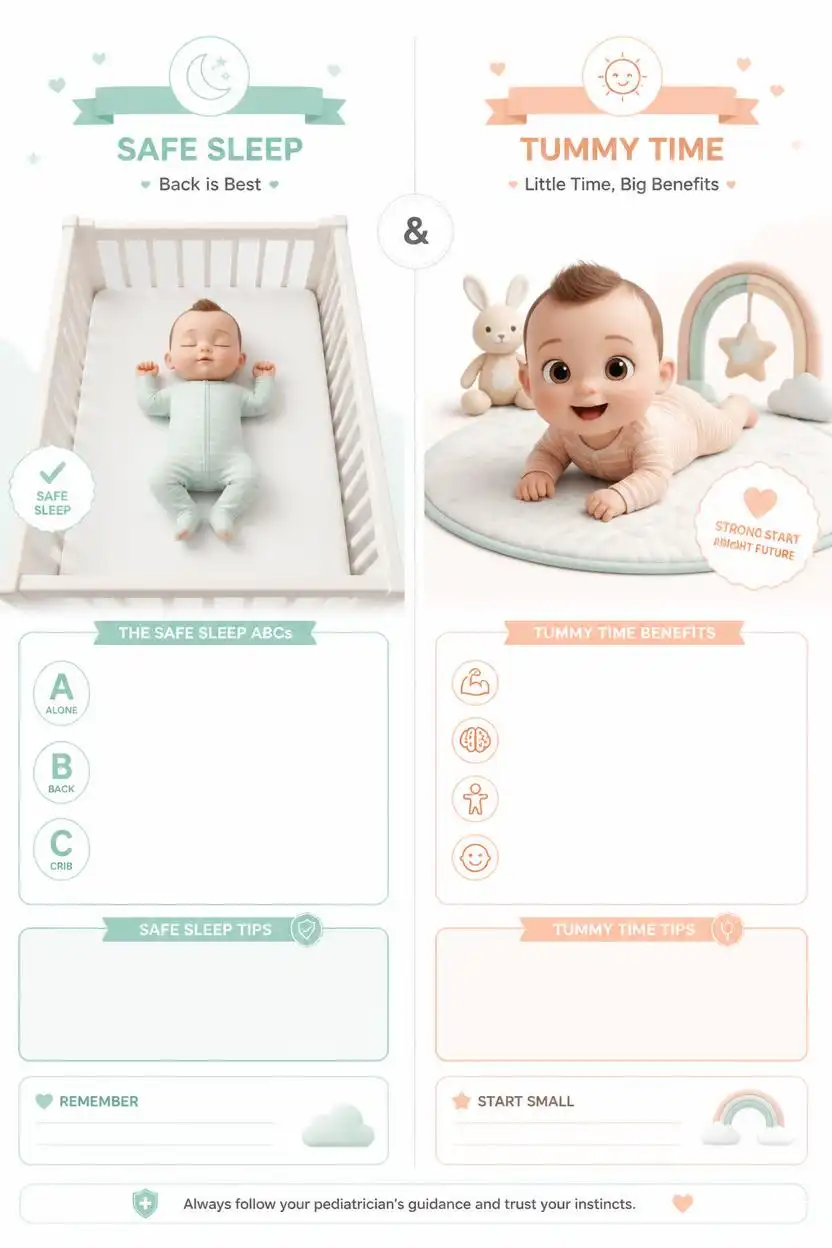
The AAP’s safe sleep guidelines recommend back-sleeping to reduce the risk of SIDS, which is the right call — but it does mean the back of the head can flatten slightly if parents do not actively vary positions during awake time.
What does the science say about mustard pillows and head shape?
I could not find reliable clinical evidence showing that mustard seed pillows prevent or correct positional plagiocephaly. While the practice has a long traditional history, it should not be considered an evidence-based treatment for flat head syndrome.
The skull does respond to pressure during the early months, which is true. But controlled, safe repositioning and supervised tummy time are the evidence-supported ways to manage this — not a pillow placed under a sleeping infant’s head.
Pediatrician-recommended ways to actually address flat head
If you are concerned about your newborn’s head shape, here is what pediatricians actually recommend:
- Supervised tummy time — even a few minutes several times a day relieves pressure from the back of the skull.
- Alternating head position — placing your baby’s head at different ends of the cot on alternate nights distributes pressure naturally.
- Limiting time in bouncers and car seats outside of travel, as these also put continuous pressure on the back of the head. If you are unsure about how long your baby should spend in a rocker or bouncer each day, this guide on baby rockers vs bouncers covers safe usage limits worth knowing.
- Speaking with your pediatrician — in more pronounced cases, a doctor may suggest helmet therapy (cranial orthosis), which is the only clinically supported intervention for moderate to severe plagiocephaly.
Is a Mustard Seed Pillow Safe for Newborns?
Suffocation and SIDS risk
This is the most important part of this guide, so it is worth being direct.
The American Academy of Pediatrics (AAP) recommends keeping pillows, blankets, bumper pads, and other soft objects out of an infant’s sleep area. Babies should sleep on a firm, flat, non-inclined sleep surface designed for infant sleep.
The reason is suffocation. A newborn does not have the neck strength or motor control to move their head away from a soft object that is blocking their airway. Even a flat, thin pillow can become a hazard if the baby’s face turns into it during sleep.
Mustard seed pillows, regardless of how they are traditionally used, fall into the category of soft objects that the AAP recommends removing from the sleep environment.
Choking hazard if the seam tears
Mustard seeds are very small. If the pillow fabric tears — and fabric does wear over time, especially with repeated washing — those seeds can spill out. For a baby who mouths everything, loose seeds present a choking risk.
This is not a theoretical concern. It is a practical one worth considering, particularly with inexpensive or handmade versions that may not have reinforced seams.
Allergic reaction risk
Mustard is one of the 14 major allergens listed by the European Food Safety Authority and is included in allergen labeling requirements across the UK and EU. While skin contact with mustard seeds through fabric is different from ingestion, parents with a family history of mustard allergy or general seed allergies should be particularly cautious.
Age-wise safety summary
- 0–12 months: Do not place a mustard seed pillow or any other pillow in an infant’s sleep area. Follow safe-sleep guidance by using a firm, flat sleep surface free of pillows and other soft objects.
- 12 months and older: Sleep-safety recommendations change as children grow, but pillows are not necessary for every child. Follow age-appropriate guidance and your pediatrician’s advice if you have concerns.
What Does the AAP Recommend About Infant Sleep Safety?
The safe sleep guidelines
The AAP updated its safe sleep guidelines in 2022. The core recommendations remain consistent and are widely supported across pediatric medicine:
- Always place babies on their back to sleep.
- Use a firm, flat sleep surface — a crib, bassinet, or play yard that meets current safety standards.
- Keep the sleep area free of pillows, blankets, stuffed animals, and bumpers.
- Room-share without bed-sharing for at least the first 6 months.
These guidelines exist because SIDS and sleep-related infant deaths, while less common than they once were, still occur — and soft bedding remains one of the modifiable risk factors.
Safe Alternatives for Flat Head Prevention
Tummy time — the most effective method
Supervised tummy time while your baby is awake can help reduce prolonged pressure on the back of the head while supporting neck and upper-body development.
Start with a few minutes at a time from the first weeks of life, building up as your baby gets stronger. Many babies resist it initially — this is normal. A rolled-up towel under the chest can make it more comfortable at first. A simple DIY baby play gym can also make tummy time more engaging, giving your baby something to look at and reach for while off their back.
Repositioning during sleep
You can alternate which end of the cot your baby’s head rests at on different nights, which naturally encourages them to look in different directions toward light and movement in the room. Some parents also gently turn a sleeping baby’s head to alternate sides — though always ensure this is done carefully and the baby remains on their back.
When to ask about helmet therapy
If your baby’s head shape is noticeably flat or the asymmetry is becoming more pronounced, speak with your pediatrician. Depending on the baby’s age and the severity of the plagiocephaly, the doctor may recommend repositioning, physical therapy, specialist evaluation, or helmet therapy.
If You Already Have a Mustard Seed Pillow
If you already have a mustard seed pillow, do not place it under your baby’s head during sleep, including daytime naps, even with supervision. Keep it entirely out of the infant’s sleep area. The AAP specifically states that pillows or cushions should not be used under or in addition to an infant’s sleep surface.
If you are considering using it for awake activities, discuss this with your pediatrician first, particularly if your baby is very young or has a medical condition affecting movement, muscle tone, or head shape.
Do not assume that a mustard seed pillow is safe simply because a seller describes it as “certified” or “safety tested.” Product safety requirements can depend on how a product is designed, marketed, and intended to be used. For an infant’s sleep environment, the safest approach is to follow established safe-sleep guidance and keep pillows and other soft objects out of the sleep area.
Related Reads
- Baby Rocker vs Bouncer: What Is the Difference and Which Is Safer?
- How to Make a Baby Play Gym at Home (And Do You Really Need One?)
- Which Baby Product Brands Are Banned — and How to Check Safety Certifications
Frequently Asked Questions
At what age can a baby use a mustard seed pillow?
The AAP recommends keeping pillows, cushions, and other soft objects out of an infant’s sleep area. During the first year, babies should sleep on a firm, flat sleep surface without pillows or other soft bedding.
Can mustard seed pillows cause SIDS?
There is no study specifically linking mustard seed pillows to SIDS. However, any soft object in an infant’s sleep area increases suffocation risk — which is one of the factors associated with sleep-related infant deaths. The safest choice is a firm, pillow-free sleep surface.
Does a mustard seed pillow really fix flat head?
No clinical evidence supports this. Tummy time, repositioning, and — when necessary — helmet therapy are the evidence-based approaches to managing positional plagiocephaly.
Is a mustard seed pillow safe for a 1-month-old?
No. At one month, a baby lacks the neck strength to move their head away from a soft object. Using any pillow at this age — including mustard seed — creates an unnecessary suffocation risk during sleep.
Are mustard seed pillows certified safe for babies?
Safety claims made by sellers should not be taken as proof that a mustard seed pillow is appropriate for infant sleep. Rather than relying on product marketing, follow established infant safe-sleep guidance and keep pillows and other soft objects out of the baby’s sleep area.
A Final Thought
It is completely understandable to feel pulled between traditional family advice and modern pediatric guidance — especially as a new parent trying to do the best for your baby. Mustard seed pillows have been used for generations and come from a place of genuine care.
But the safest sleep space for a newborn is a simple one: firm, flat, and free of soft objects. That is what the evidence supports. For flat head concerns, tummy time costs nothing and carries no risk — and it is genuinely effective when done consistently from the early weeks.
If you are unsure about your baby’s head shape or sleep setup, your pediatrician is the best person to talk to. They can give you guidance based on your specific baby — not general internet advice.
Comments
Be the first to leave a comment!