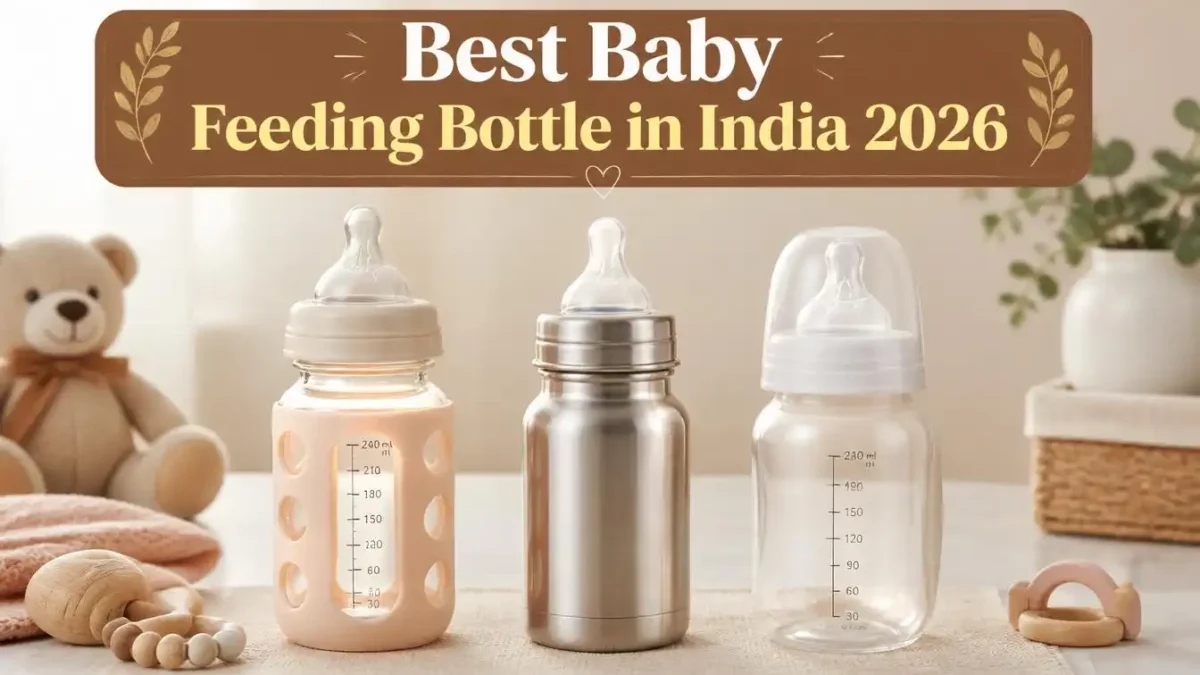
When I became a parent, I thought picking a feeding bottle would take five minutes. I was wrong. Standing in a baby store staring at rows of glass bottles, steel bottles, BPA-free plastic bottles, and silicone options – each claiming to be the “safest” – I had no idea where to start.
If you’re in that same spot right now, this guide is for you. No complicated jargon, no exaggerated claims. Just an honest, practical breakdown of which material works best for Indian babies – and in which situation.
Why the Bottle Material Matters More Than You’d Think
A feeding bottle goes through a lot of stress – daily boiling or steam sterilisation, hot milk, repeated washing, drops on hard floors. The material determines not just how long the bottle lasts, but also whether it can release anything into the milk under those conditions.
Also Read: Is Aveeno Good for Babies?
In India, we tend to boil bottles more frequently than parents in some other countries do, which makes the choice of material even more relevant. Something that holds up fine with occasional washing may behave differently when you’re boiling it every day for the first six months of your baby’s life.
Glass Baby Bottles – The Cleanest Option at Home
Glass is chemically inert. That means it doesn’t leach anything into your baby’s milk, even when heated repeatedly. A glass bottle that’s been boiled a hundred times will behave the same as a new one. It also doesn’t absorb odours or stains, so cleaning stays straightforward.
The obvious concern is breakage. Glass bottles can and do shatter, which makes them a bit nerve-wracking during night feeds or when you’re exhausted and not holding things as carefully as usual. Most glass bottles sold today come with a protective silicone sleeve that cushions drops and reduces the chance of shattering – but doesn’t eliminate it entirely.
For home use with a newborn who’s mostly being held during feeds, glass works beautifully. It becomes trickier once your baby starts grabbing and throwing things, or when you’re travelling.
Honest take: Glass is the easiest material to trust from a safety standpoint, but it’s not the most practical for every situation. Many Indian parents start with glass and switch to steel or move to a combination once the baby gets more active.
Best for: Home use, newborns, parents who prioritise material safety above convenience.
Stainless Steel Baby Bottles – Durable, Chemical-Free, and Travel-Ready
Food-grade stainless steel (usually 304-grade, also labelled 18/8) is a solid choice that combines chemical safety with genuine durability. It won’t crack, shatter, or degrade with repeated sterilisation. It’s also free from BPA and the other chemical concerns associated with plastic.
There are two practical limitations worth knowing upfront. First, you can’t see the milk level inside. For parents who carefully track feed volumes – especially in the early weeks when doctors ask how much the baby is drinking – this is genuinely frustrating. Some steel bottles address this with measurement markings on the outside or a small transparent window, but visibility is still limited compared to glass or clear plastic.
Second, steel retains heat well. That’s useful for keeping formula warm, but it also means the milk can stay hot longer than expected. Always test the temperature on your wrist before feeding – this matters more with steel than with glass.
Best for: Travel, active babies who hold their own bottles, parents who want long-term durability without chemical concerns.
When buying, look for bottles labelled “304 food-grade stainless steel” or “18/8 stainless steel.” This grade is widely considered safe for food and drink use.
Plastic Baby Bottles – Practical but Worth Understanding
Plastic bottles remain popular in India because they’re lightweight, affordable, and easy to find everywhere from pharmacies to supermarkets. The shift to BPA-free plastics over the past decade was a real improvement – BPA (bisphenol A) is a chemical that was used in older hard plastics and raised legitimate health concerns, particularly around hormonal effects.
That said, “BPA-free” doesn’t automatically mean zero concerns. Research in recent years has looked at other chemicals in plastics – including BPS and various phthalates – that may behave similarly to BPA under certain conditions. This area is still being studied, and the evidence isn’t conclusive enough to say all plastic bottles are harmful. But it is a reason to be thoughtful about how you use them.
Some practical habits that reduce potential exposure if you do use plastic bottles:
- Don’t heat milk directly in a plastic bottle – warm it separately and pour it in
- Replace bottles when they become scratched, cloudy, or show visible wear – degraded plastic surfaces are more likely to shed particles
- Look for bottles labelled with recycling symbol 5 (polypropylene, or PP), which is considered more stable at higher temperatures than some other plastics
- Avoid leaving milk sitting in a plastic bottle for long periods before feeding
For families on a tight budget, or parents who need lightweight options for daily travel, plastic with careful usage is still a reasonable practical choice. The key is knowing the limitations and managing them.
Best for: Budget-conscious parents, short-term use, situations where weight and cost matter most.
Silicone Baby Bottles – A Newer Alternative Worth Knowing About
Medical-grade silicone bottles are relatively new to the Indian market but have been gaining attention. Silicone is soft, flexible, and free from BPA and related chemical concerns. It’s also virtually unbreakable – you can drop it without worrying.
The main downsides are cost and cleaning. Silicone bottles tend to be more expensive, and the soft material can sometimes trap residue if not cleaned thoroughly. Not all silicone bottles work equally well with every sterilisation method, so check compatibility with your steriliser before buying.
Best for: Parents who want a flexible, unbreakable, chemical-free option and don’t mind paying a bit more.
Glass vs Steel vs Plastic – Quick Comparison Table
| Feature | Glass | Stainless Steel | BPA-Free Plastic | Silicone |
|---|---|---|---|---|
| Chemical Safety | Excellent – no leaching | Excellent – food-grade steel | Moderate – use carefully | High (medical-grade) |
| Durability | Breakable if dropped | Very durable, won’t crack | Lightweight, scratches over time | Flexible, unbreakable |
| Milk Visibility | ✅ Clear – easy to read | ❌ Can’t see inside | ✅ Clear – easy to read | ⚠️ Limited visibility |
| Ease of Sterilisation | Excellent – handles boiling well | Excellent – handles boiling well | Steam preferred over boiling | Check steriliser compatibility |
| Travel-Friendly | ⚠️ Risk of breaking | ✅ Very practical | ✅ Lightweight and handy | ✅ Soft and unbreakable |
| Price Range (India) | ₹500 – ₹1,200 | ₹600 – ₹1,500 | ₹200 – ₹600 | ₹700 – ₹1,800 |
| Best Suited For | Home, newborns | Travel, active babies | Budget, convenience | Chemical-free + unbreakable |
Popular Baby Feeding Bottle Brands in India
A few brands come up again and again when Indian parents talk about feeding bottles – each is strong in different areas:
- Philips Avent: One of the most widely available brands in India. Their Natural Response glass and plastic bottles are popular for breastfed babies. Consistent quality, good anti-colic nipple design.
- Pigeon: A trusted Japanese brand with a big presence in India. Their SofTouch nipples are designed to reduce nipple confusion for babies transitioning between breast and bottle, making them a common first choice for breastfeeding mothers returning to work.
- Dr. Brown’s: Known for an internal vent system that reduces the amount of air the baby swallows during feeds. Often recommended by paediatricians for babies with gas or colic issues.
- Mee Mee: An affordable Indian brand, widely available in local stores and pharmacies. A practical option for parents who want decent quality without spending a lot.
- Comotomo: A premium silicone bottle brand. The entire bottle body is soft silicone, making it one of the most breast-like options available. Found mostly online in India.
Recommended Glass Bottle: Philips Avent Natural Glass Bottle Shop Now on Amazon
Check price and availability for the Stainless Steel Baby Feeding Bottle on Amazon
A word of honest advice: no single bottle is universally “best.” Some babies accept any bottle without fuss. Others are remarkably particular about nipple shape, softness, and flow rate. It’s usually worth buying one or two first to test before committing to a full set – that way you’re not stuck with a six-pack of something your baby won’t take.
Things to Check Before You Buy Any Feeding Bottle
Beyond material, a few practical details make a real difference to how well feeding goes:
- Nipple flow rate: Always start with a slow-flow (newborn) nipple, regardless of which bottle you choose. A fast-flow nipple delivers milk too quickly for young babies, leading to gulping, swallowed air, and fussiness after feeds. Most brands offer size 1 (slow flow) for newborns and increase from there.
- Wide-neck vs narrow-neck: Wide-neck bottles are easier to fill, easier to clean, and have a nipple shape closer to a breast – which matters if you’re combining bottle and breastfeeding. Narrow-neck bottles were the older standard and are becoming less common.
- Anti-colic design: If your baby tends to get gassy or cry a lot after feeds, a bottle with a built-in venting system can help reduce air swallowed during feeding. Dr. Brown’s internal vent is probably the most well-known; some other brands have vented bases or collars.
- Steriliser compatibility: Check the bottle’s material against your sterilisation method before buying. Glass and steel handle boiling beautifully. Plastic and silicone are often better suited to steam sterilisation at lower temperatures.
How to Sterilise Baby Bottles Safely at Home in India
Boiling is still the most common sterilisation method used by Indian parents – and it works well for glass and stainless steel. For plastic bottles, repeated boiling can speed up surface wear, so steam sterilisation (which uses lower heat) or cold-water sterilising tablets are gentler alternatives.
A few things that are easy to overlook:
- Disassemble the bottle completely before sterilising – the nipple, collar, bottle body, and any vent pieces all need to be cleaned and sterilised separately
- Inspect the nipple regularly for small cracks or tears, which can be hard to spot – a damaged nipple should be replaced promptly
- After sterilising, let bottles air dry on a clean surface rather than wiping them – dish towels can actually transfer bacteria back onto a clean bottle
If you’re also figuring out what goes into the bottle – whether that’s expressed breast milk, formula, or a combination – our guide on formula milk for 6-month-old babies covers what to look for based on your baby’s stage and needs.
Frequently Asked Questions
Is glass or steel bottle better for Indian babies?
Both are safe choices – neither leaches chemicals into milk, and both handle the frequent sterilisation common in Indian households well. The practical difference is visibility: glass lets you see how much milk is left and track feed volumes, which many parents find helpful in the early weeks. Steel is more durable and won’t break if dropped. For home use with young babies, glass tends to be more convenient. For travel or once your baby becomes more active, steel often wins.
Are BPA-free plastic bottles really safe?
BPA-free means the bottle doesn’t contain bisphenol A, which was the main chemical concern in older hard plastics. That’s a genuine improvement. However, some research has looked at other chemicals in plastic that may also be worth considering, particularly with repeated heat exposure. BPA-free plastic isn’t a risk-free guarantee – it simply removes one specific concern. If you use plastic bottles, avoid heating milk directly in them, and replace them once they become scratched or cloudy.
What grade stainless steel is safe for baby bottles?
Food-grade 304 stainless steel (also called 18/8 stainless steel) is the grade considered safe for food and drink contact. This is what good-quality baby bottles are made from. When buying a steel bottle, look for this specification on the packaging or product listing. Avoid unlabelled bottles where the steel grade isn’t clearly stated.
How do I sterilise baby bottles safely at home?
For glass and stainless steel, boiling is effective and widely used in India. Place disassembled parts in a pot, cover with water, boil for 5 minutes, then let them air dry on a clean surface. For plastic bottles, steam sterilisation at lower temperatures is gentler on the material. Cold-water sterilising solution (sterilising tablets dissolved in water) is another option that works well for any material without heat. Always disassemble bottles fully before sterilising.
Can I heat milk in a steel baby bottle?
You can warm milk in a steel bottle by placing it in a bowl of warm water (bottle warming by immersion). Do not heat a steel bottle directly on a stove or in a microwave. Microwaves are not suitable for warming baby bottles in any material – they heat unevenly and can create hot spots in the milk that can burn a baby’s mouth even if the outside of the bottle feels fine. Always test milk temperature on your wrist before feeding, regardless of what bottle material you use.
At what age should I stop using a feeding bottle?
Most paediatric guidelines, including those from the Indian Academy of Pediatrics (IAP), suggest beginning the transition from bottle to cup from around 12 months, aiming to be bottle-free by 18 months. Extended bottle use – especially at bedtime – is linked to dental decay because milk can pool around the teeth during sleep. Starting to introduce a sippy cup or open cup from around 6 months alongside bottle feeds makes the eventual switch significantly easier.
Which Bottle Should You Actually Choose?
Here’s a simple way to think about it: if you’re at home most of the time and want the cleanest option with no concerns at all, start with glass. If you travel often or your baby is mobile and grabby, steel gives you durability without compromising safety. If budget is the main constraint, go with BPA-free polypropylene plastic but be careful about heat and replace bottles when they show visible wear.
Many parents end up using a combination – glass at home, steel or a good plastic option when travelling. There’s no rule that says you need to pick just one.
Whatever bottle you choose, the nipple flow rate and sterilisation habits matter just as much as the material. A good bottle used carelessly won’t serve your baby as well as a practical choice used with proper care.
Comments
Be the first to leave a comment!